

Not all effective training involves movement.
In fact, some of the most challenging — and beneficial — exercises require you to do the exact opposite: stay completely still.
This is the foundation of isometric training. No explosive reps, no visible motion — just sustained muscular tension. And while it may look simple from the outside, anyone who has held a plank for longer than a minute knows otherwise.
Isometric training is often overlooked in favour of more dynamic lifting styles. Yet when used properly, it can improve strength, stability, and control in ways that traditional training alone cannot.
What is Isometric Training?
Isometric training refers to exercises where the muscle produces force without changing length. In other words, the joint angle remains fixed while the muscle is under tension.
Unlike concentric (lifting) or eccentric (lowering) movements, there is no visible motion. However, internally, the muscle is working continuously to maintain position. This requires energy, coordination, and neural input, making isometric work far more demanding than it appears.
You will have likely encountered isometric exercises already, whether you realised it or not. Common examples include:
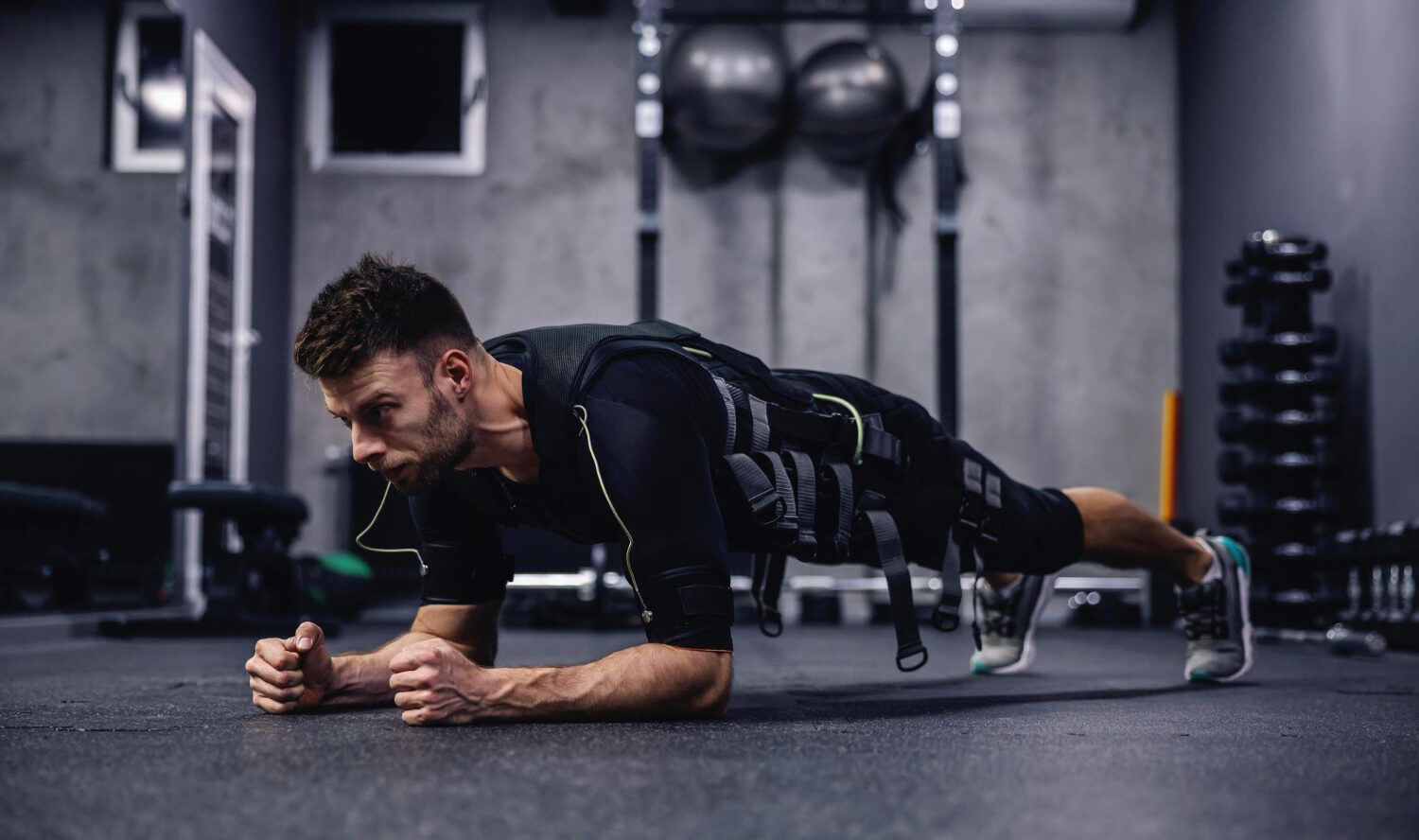
- Planks
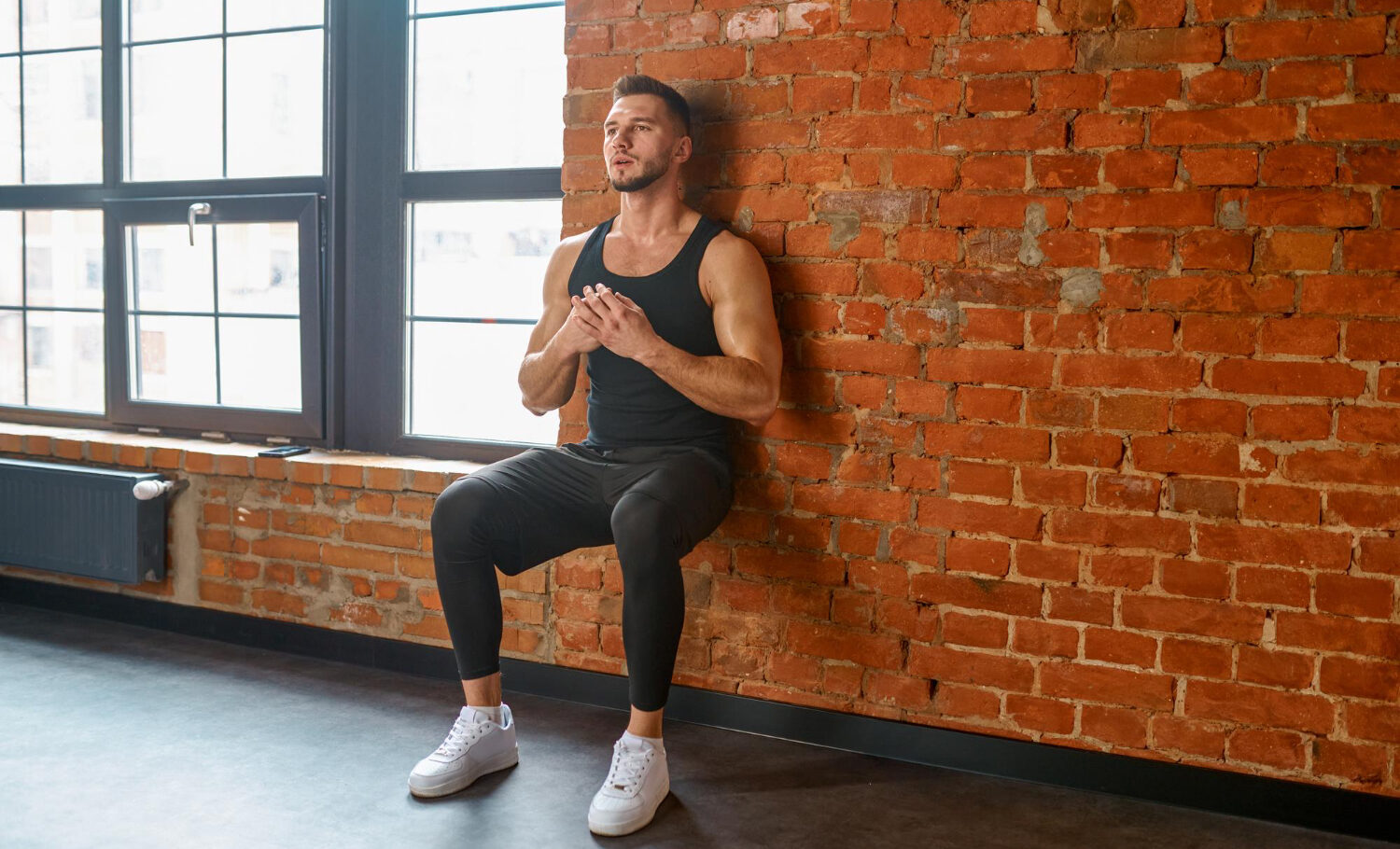
- Wall sits
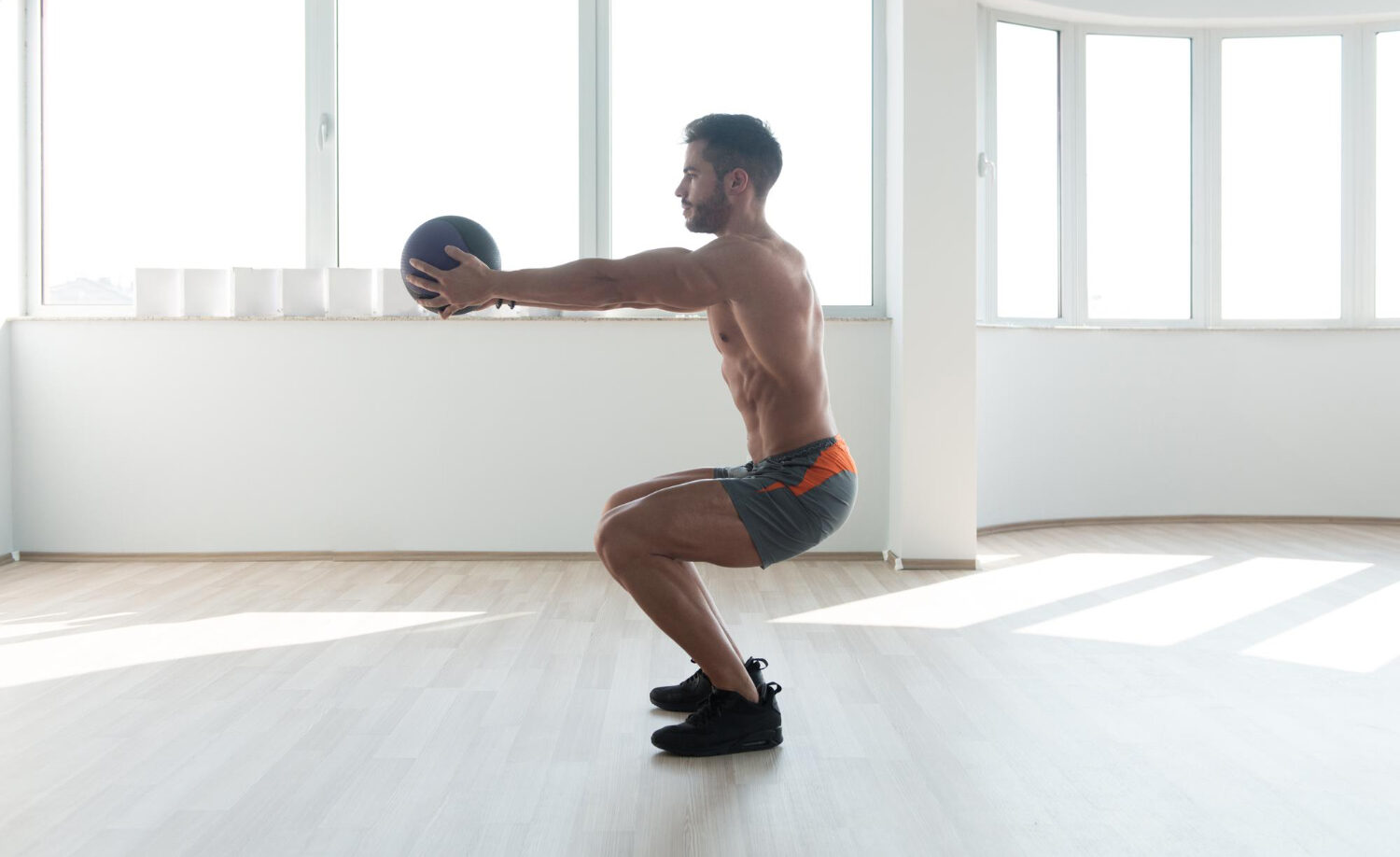
- Holding the bottom of a squat
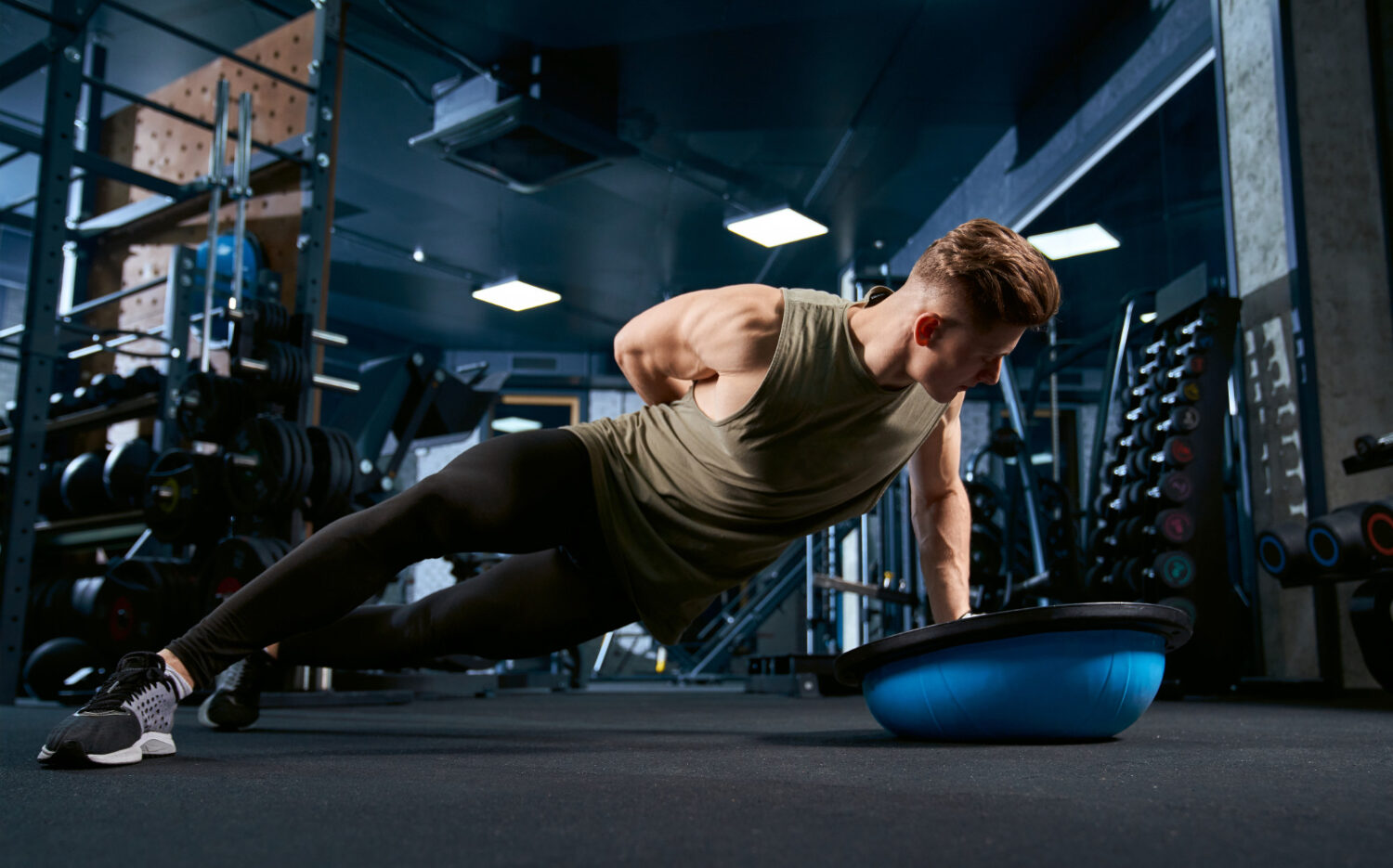
- Paused push-ups
These movements strip training back to its simplest form — tension without movement.

How Isometric Contractions Work
During an isometric contraction, muscle fibres generate force without shortening or lengthening. The nervous system is still actively recruiting motor units to maintain tension, and this can be surprisingly intense.
From a physiological standpoint, isometric training:
- Increases time under tension
- Enhances neuromuscular control
- Can produce high levels of force at specific joint angles
Research suggests that isometric contractions can generate force outputs comparable to dynamic movements, particularly when performed with intent (Oranchuk et al., 2019). The key difference is that this force is maintained, rather than expressed through movement.
Types of Isometric Exercises
Not all isometric training is the same. Broadly, it can be divided into two categories.
The first is yielding isometrics, which most people are familiar with. These involve holding a position against gravity or resistance — for example, a plank or wall sit. They are typically used to build endurance, stability, and control.
The second is overcoming isometrics, which are less common but highly effective for strength development. These involve pushing or pulling against an immovable object — such as driving into a fixed bar in a squat rack. The intent here is maximal effort, even though no movement occurs.
Both approaches have value. One builds control and endurance, the other develops force production.
Benefits of Isometric Training
One of the main reasons to include isometric work in your routine is its ability to target specific weaknesses. Because the joint angle remains fixed, you can build strength exactly where you need it — often at sticking points within a lift.
Beyond that, isometric training offers several key advantages.
It improves stability and control. Holding a position under tension forces the body to stabilise joints and maintain alignment, which carries over into both strength training and everyday movement.
It also increases time under tension, a factor closely linked to muscle growth. While isometric training alone is unlikely to maximise hypertrophy, it can enhance the overall stimulus when combined with dynamic work.
Another benefit is reduced joint stress. Because there is no repeated movement, isometric exercises can be easier on the joints, making them useful during periods of recovery or when managing minor injuries.
Finally, there is the practical aspect. Many isometric exercises require minimal equipment, making them easy to incorporate into almost any routine.
Drawbacks of Isometric Training
Despite its strengths, isometric training has limitations.
One of the main drawbacks is that strength gains tend to be specific to the angle being trained. This means that while you may get stronger in a particular position, that strength does not always fully transfer across the entire range of motion.
There is also less carryover to dynamic movement compared to traditional resistance training. Most real-world activities involve motion, and relying solely on isometric work would leave gaps in overall development.
In addition, isometric exercises generally burn fewer calories, simply because there is no movement involved. While this is not a major concern for strength-focused training, it is worth noting.
Finally, there is the mental challenge. Holding a position under tension can become uncomfortable very quickly. It requires focus and discipline, particularly as fatigue sets in.
How to Structure an Isometric Training Workout
Isometric training works best when integrated into a broader programme rather than used in isolation.
You can approach it in a few different ways. Some prefer to dedicate a full session to isometric work, while others incorporate it into existing workouts. A third option is to use it as a finisher — adding short, intense holds at the end of a session to fully fatigue the muscles.
A simple structure might involve:
- 4–6 exercises
- 3–4 sets per exercise
- Holds lasting between 20–60 seconds
The exact structure will depend on your goal, but consistency and intent are what matter most.
Example Isometric Workout
A basic full-body isometric workout might include:
- Plank hold – 3 sets (30–60 seconds)
- Wall sit – 3 sets (30–60 seconds)
- Isometric push-up hold – 3 sets (held halfway down)
- Glute bridge hold – 3 sets (30–45 seconds)
- Dumbbell hold (bicep curl position) – 3 sets (20–40 seconds)
The focus should always be on maintaining tension and proper positioning, rather than simply lasting as long as possible.

How Long Should You Hold?
The duration of each hold depends largely on what you are trying to achieve.
For strength, shorter holds with higher effort tend to be more effective. For endurance and stability, longer holds can be useful.
As a general guide:
- 10–30 seconds → strength-focused holds
- 30–60+ seconds → endurance and stability
What matters most is the quality of the hold. A shorter, high-tension effort is far more valuable than a long, passive one.
Progressive Overload in Isometric Training
Like any form of training, isometric work requires progression.
This does not always mean adding weight. Progress can come from:
- Increasing hold duration
- Improving positioning (e.g. deeper squat hold)
- Increasing resistance where possible
- Adding more total sets
Without some form of progression, the body adapts — and progress slows.
When Should You Use Isometric Training?
Isometric training is best used as a complement to traditional resistance training.
It is particularly effective when you want to:
- Strengthen weak points within a lift
- Improve core stability
- Reduce joint stress during high-volume training phases
- Support rehabilitation or recovery
Used strategically, it adds depth to your training rather than replacing what already works.
Isometric Training Could Help You to Progress
Isometric training is often underestimated because it lacks movement. But beneath the stillness, there is significant effort.
It develops strength in a different way — not through motion, but through control and sustained tension.
You do not need to overhaul your training to benefit from it. Even small additions — a pause here, a hold there — can make a noticeable difference over time.
References
- Oranchuk, D.J. et al. (2019). Isometric training and long-term adaptations. Sports Medicine.
- Lum, D., & Barbosa, T.M. (2019). Effects of isometric strength training. Journal of Strength and Conditioning Research.
- Schoenfeld, B.J. (2010). The mechanisms of muscle hypertrophy. Journal of Strength and Conditioning Research.
- American College of Sports Medicine (2009). Progression models in resistance training.