

There is a quiet distinction between those who train and those who transform. It isn’t talent, nor is it luck. It is intention.
The fitness industry is saturated with advice and endless programmes promising rapid results. Yet for most men, progress remains frustratingly inconsistent. The issue is rarely effort — it is direction. Without clearly defined goals, even the most committed training becomes little more than well-disguised wandering.
Setting intelligent workout goals is not about writing down “get fitter” or “lose weight.” It is about creating a system — one that aligns your ambition with structure, strategy, and execution.
Let’s approach this properly.
Understanding the Types of Fitness Goals
Before you can plan anything, you must define what you are actually working towards. Not all fitness goals are the same, and each demands a different approach.
1. Weight Loss
Typically centred around reducing body fat, weight loss goals require a combination of resistance training, cardiovascular work, and — most critically — dietary control.
2. Muscle Gain (Hypertrophy)
This is the pursuit of size. Muscle hypertrophy involves structured resistance training, sufficient training volume, and a caloric surplus with adequate protein intake.
3. Strength
Strength-focused goals prioritise lifting heavier loads. This often means lower repetition ranges, longer rest periods, and progressive increases in weight.
4. Aerobic Fitness
Improving cardiovascular endurance — whether for general health or performance — requires steady-state cardio, interval training, or sport-specific conditioning.
5. Speed and Power
These are performance-driven goals, often seen in athletic training. Sprint work, plyometrics, and explosive resistance training take precedence.
6. Flexibility and Mobility
Frequently overlooked, these goals focus on range of motion, injury prevention, and movement quality. They require consistent mobility work and stretching routines.
7. General Health and Longevity
A balanced goal encompassing strength, cardiovascular health, mobility, and body composition — arguably the most sustainable approach for most men.
It is entirely possible to pursue more than one goal, but clarity is crucial. Attempting to maximise everything at once usually results in mediocre progress across the board.


The Power of Vision: Seeing the End Before You Begin
Before setting structured goals, you must develop something more fundamental — a vision.
This is not abstract motivation or vague ambition. It is the ability to internally visualise the outcome you are working towards, in detail. What do you look like? How do you move? How do you feel physically, mentally, socially?
This process matters more than most realise.
Research in sports psychology consistently shows that mental imagery enhances performance and adherence. When you can clearly picture the end state, your training becomes purposeful rather than reactive. You are no longer simply turning up — you are executing a plan tied to an identity.
A man who sees himself as strong trains differently from one who merely hopes to “get stronger.”
Vision creates alignment. It informs your decisions, shapes your habits, and reinforces consistency when motivation inevitably fades.
Without it, goals lack meaning. With it, they gain direction.
Setting SMART Goals (And Why Structure Matters)
Once your vision is clear, the next step is translating it into actionable goals. This is where the SMART framework becomes invaluable.
SMART stands for:
- Specific – Clearly defined and unambiguous
- Measurable – Quantifiable progress markers
- Achievable – Realistic given your current position
- Relevant – Aligned with your overall vision
- Time-bound – Attached to a clear timeframe
However, in practice, SMART goals should not exist in isolation. They must be layered across three distinct timeframes:
Long-Term Goals (6–12+ Months)
These define your ultimate direction. For example:
- Lose 12kg of body fat
- Add 8kg of lean muscle
- Deadlift twice your bodyweight
Long-term goals provide purpose — they are your “why.”
Medium-Term Goals (8–16 Weeks)
These act as milestones. They bridge the gap between your current state and your long-term vision. For example:
- Lose 4kg in 12 weeks
- Increase bench press by 10kg
- Run 5km in under 25 minutes
Medium-term goals provide structure — they are your “how.”
Short-Term Goals (Weekly/Daily)
These are the behaviours that drive progress. For example:
- Train four times per week
- Hit 10,000 steps daily
- Consume 150g of protein per day
Short-term goals provide consistency — they are your “what.”
Each level feeds into the next. When structured correctly, your daily actions naturally accumulate into meaningful long-term results.
Without this hierarchy, goals remain abstract. With it, progress becomes inevitable.
Building a Workout Strategy From Your Goals
Once your goals are defined, you must translate them into a practical training plan. This is where many fall short — they set ambitious targets but fail to construct a system capable of delivering them.
Your training plan should answer three key questions:
1. How Often Will You Train?
Training frequency depends on your goal, experience level, and schedule. As a general guideline:
- Beginners: 3–4 sessions per week
- Intermediate: 4–5 sessions per week
- Advanced: 5–6 sessions per week
Consistency always outweighs intensity. A sustainable schedule is far more effective than an ambitious one you cannot maintain.

2. What Will Your Workout Split Look Like?
Your “split” determines how you divide training across the week. Common approaches include:
- Full Body (3x/week) – Ideal for beginners
- Upper/Lower Split (4x/week) – Balanced and effective
- Push/Pull/Legs (5–6x/week) – Higher volume, more advanced
- Body Part Split (Bro split) – Less efficient but still viable
Your workout split choice should reflect your goal:
- Muscle gain → higher volume splits
- Strength → structured compound-focused splits
- General fitness → balanced full-body or upper/lower
3. What Exercises, Sets, and Reps?
This is where specificity matters.
- Strength Goals
- 3–6 reps
- 3–5 sets
- Heavy compound lifts (squat, deadlift, bench press)
- Muscle Gain (Hypertrophy)
- 6–12 reps
- 3–4 sets
- Mix of compound and isolation exercises
- Endurance/Aerobic
- Higher reps or timed intervals
- Shorter rest periods
Your exercise selection should prioritise:
- Compound movements (for efficiency and strength)
- Isolation exercises (for targeted development)
- Movement quality (to reduce injury risk)
Progressive Overload: The Engine of Progress
Without progressive overload, there is no adaptation. Without adaptation, there is no progress.
Put simply, progressive overload is the gradual increase of stress placed on the body during training. It forces your muscles, nervous system, and cardiovascular system to adapt — becoming stronger, larger, and more efficient over time.
What Does Progressive Overload Look Like?
There are several ways to apply it:
- Increasing weight (e.g. adding 2.5kg to your lift)
- Increasing repetitions (e.g. 8 reps → 10 reps)
- Increasing sets (e.g. 3 sets → 4 sets)
- Improving technique and range of motion
- Reducing rest time between sets
- Increasing training frequency
Each method has its place, but not all are equally effective in every context.
What Do We Recommend?
For most men, particularly those focused on strength and muscle gain, the most reliable approach is progressive load with controlled volume progression.
In practical terms:
- Prioritise increasing weight over time
- Keep your rep ranges consistent
- Gradually increase total training volume as needed
For example:
- Week 1: Bench Press – 80kg x 8 reps
- Week 2: Bench Press – 82.5kg x 8 reps
This approach is measurable, sustainable, and aligned with long-term progression.
Avoid the temptation to constantly change exercises or chase novelty. Consistency in movement patterns allows for accurate tracking — and tracking is what makes progressive overload effective.
Planning Your Diet and Nutrition
Training provides the stimulus. Nutrition provides the materials.
Without the right dietary structure, even the best training plan will fall short.
Caloric Intake
Your calorie intake must align with your goal:
- Fat Loss → Caloric deficit
- Muscle Gain → Caloric surplus
- Maintenance/Recomposition → Caloric balance (or slight deficit/surplus depending on experience level)
Consistency matters more than perfection. Extreme deficits or surpluses are rarely sustainable — or effective.
Protein Intake
Protein is non-negotiable.
Current research suggests:
- 1.6–2.2g of protein per kg of bodyweight per day is optimal for muscle growth and retention.
This supports recovery, preserves lean mass during fat loss, and enhances overall performance.
Carbohydrates and Fats
- Carbohydrates fuel performance, particularly in high-intensity training
- Fats support hormonal health and overall wellbeing
A balanced approach is typically best, adjusted based on personal preference and performance.
Nutrient Timing (Simplified)
While often overcomplicated, a few principles are worth following:
- Eat a balanced meal 2–3 hours before training
- Include protein post-workout
- Maintain consistent daily intake
It is not about perfection — it is about consistency over time.
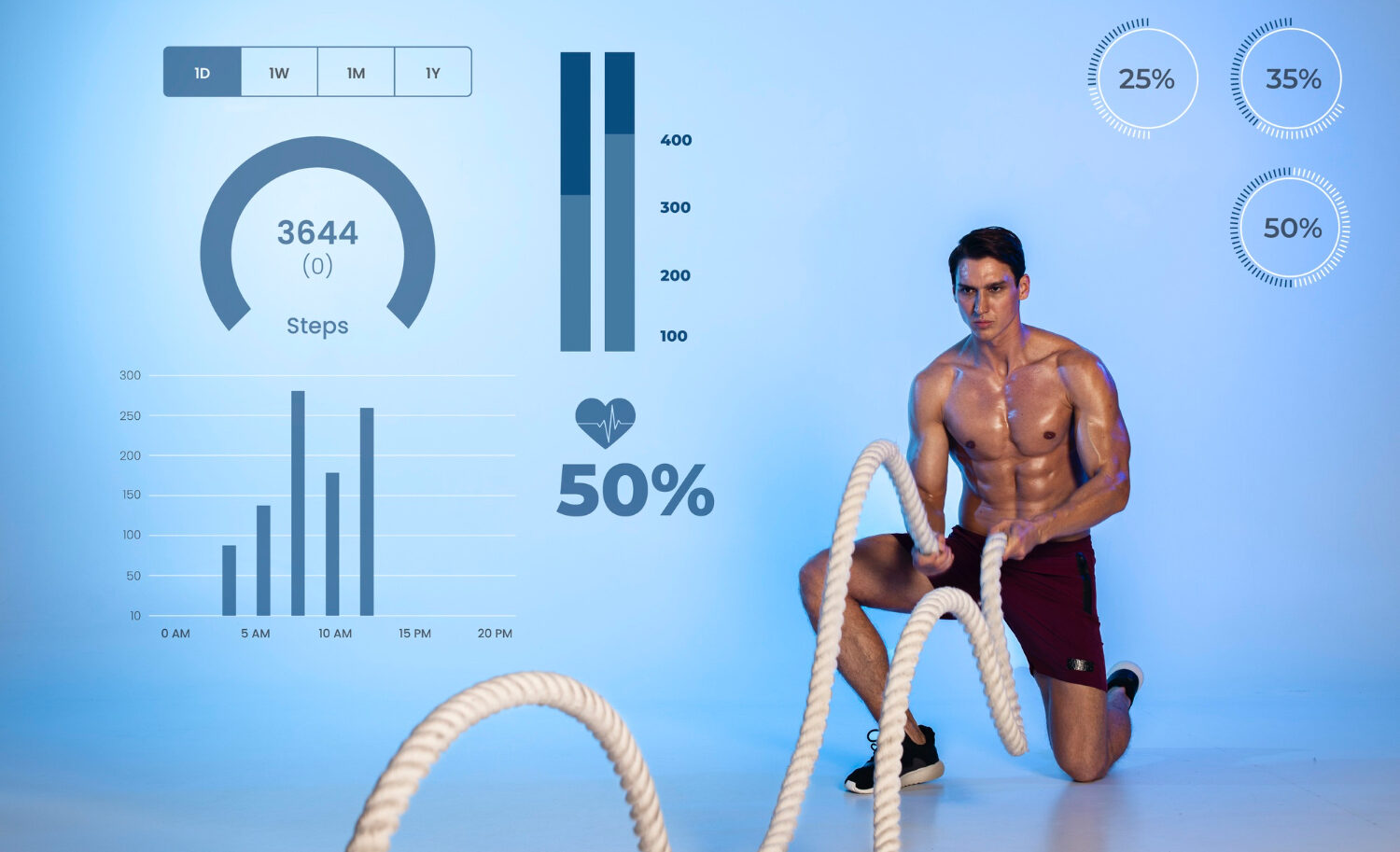
Tracking Progress and Making Adjustments
A goal without tracking is simply a guess.
To ensure your plan is working, you must measure progress objectively:
- Bodyweight (weekly averages)
- Progress photos
- Strength metrics (key lifts)
- Measurements (waist, chest, arms, etc.)
- Performance markers (e.g. run times, endurance capacity)
If progress stalls, adjust one variable at a time:
- Increase or decrease calories
- Modify training volume
- Adjust intensity or frequency
Patience is essential. Most plateaus are not failures — they are feedback.
Recovery: The Overlooked Variable
Training breaks the body down. Sleep and recovery builds it back stronger.
Neglect recovery, and progress will stall regardless of how well your plan is structured.
Key areas to prioritise:
- Sleep (7–9 hours per night)
- Rest days (at least 1–2 per week)
- Stress management
- Mobility work and active recovery
In 2026, optimisation is not about doing more — it is about doing enough, then recovering properly.
Consistency Over Complexity
Perhaps the most important principle of all:
The best plan is not the most advanced. It is the one you can follow consistently.
You do not need a perfect programme. You need a repeatable one.
Too many men spend their time searching for optimal strategies while neglecting execution. In reality, progress is built on:
- Showing up
- Following the plan
- Adjusting when necessary
- Repeating the process
Week after week.
Set Fitness Goals and Make a Workout Plan Today
Setting workout goals in 2026 is not about chasing trends or copying someone else’s routine. It is about building a structured, intentional system that reflects your ambitions and your reality.
Define your goal.
Visualise the outcome.
Break it into actionable steps.
Build a plan.
Apply progressive overload.
Support it with proper nutrition.
Track everything.
Adjust when necessary.
Then — and this is where most fall short — stay consistent.
Because in the end, progress is rarely dramatic. It is quiet, incremental, and earned.
References
- Schoenfeld, B.J. (2010). The mechanisms of muscle hypertrophy and their application to resistance training.Journal of Strength and Conditioning Research.
- Morton, R.W. et al. (2018). Protein intake to maximise muscle mass. British Journal of Sports Medicine.
- American College of Sports Medicine (ACSM). (2009). Progression models in resistance training.
- Locke, E.A. & Latham, G.P. (2002). Building a practically useful theory of goal setting and task motivation.American Psychologist.
- Weinberg, R. (2008). Does imagery work? Effects on performance and mental skills. Journal of Imagery Research in Sport and Physical Activity.
- Helms, E.R. et al. (2014). Evidence-based recommendations for natural bodybuilding contest preparation. Journal of the International Society of Sports Nutrition.