
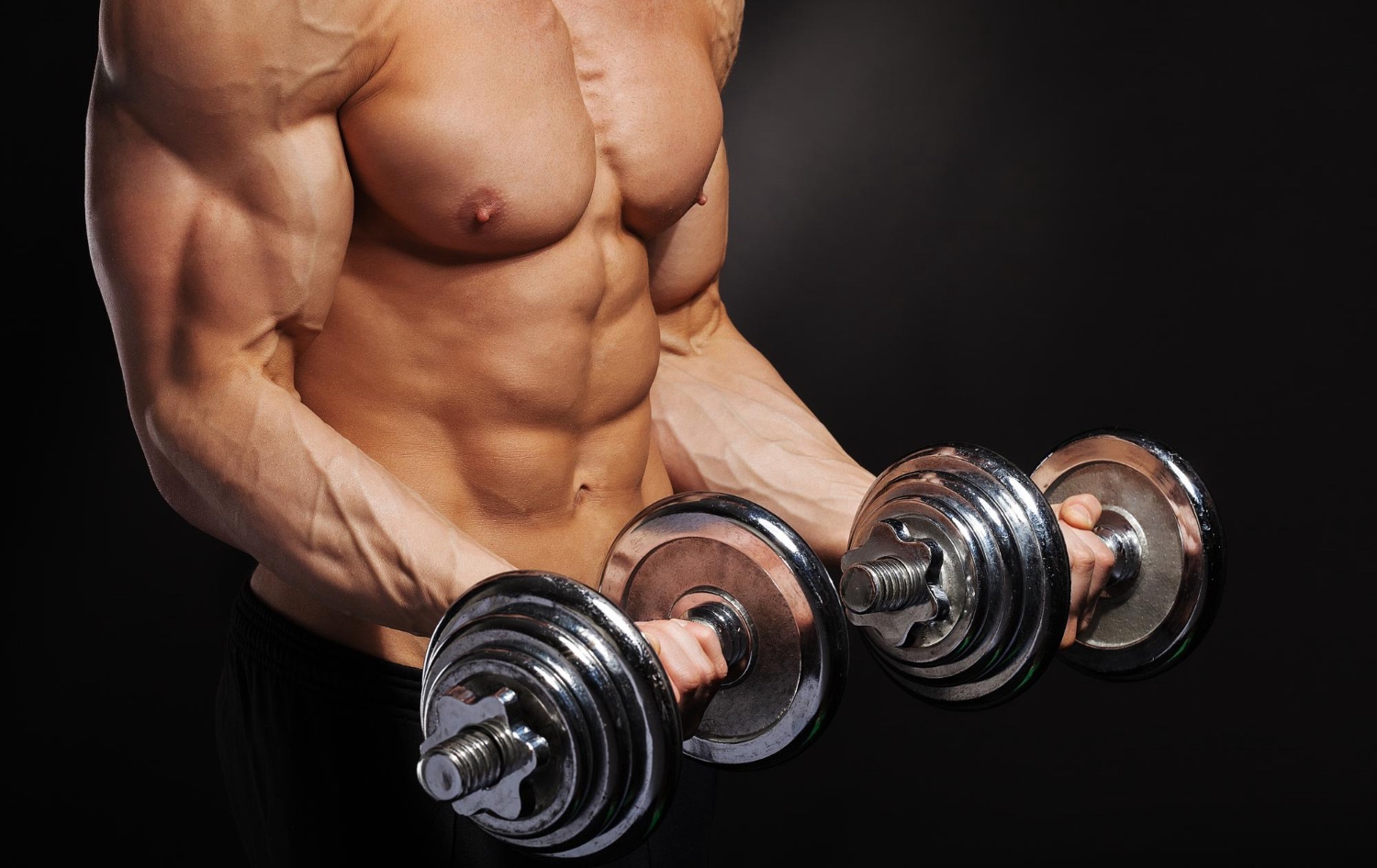
If you’ve spent any time in a gym, you’ve probably seen someone finish a hard set of dumbbell curls, immediately grab a lighter pair of weights, and keep going without taking a break. It might look like they’re simply trying to make the exercise harder, but they’re actually using a training technique known as a drop set.
Drop sets have been a staple of bodybuilding for decades. Popularised by legendary physique athletes and now widely used by recreational gym-goers, they’re often promoted as a way to increase muscle growth, add training intensity, and push beyond traditional limits. Yet despite their popularity, many people still aren’t entirely sure what drop sets are, when they should be used, or whether they’re actually effective.
The good news is that drop sets are relatively simple to understand and can be incorporated into almost any training programme. Whether you’re a beginner looking to learn new training methods or an intermediate lifter trying to break through a plateau, understanding how and when to use drop sets can help you get more from your workouts.
In this guide, we’ll cover everything you need to know about drop sets, including their benefits, potential drawbacks, examples of how to use them, and what the latest research says about their effectiveness.
What Are Drop Sets?
A drop set is a resistance training technique where you perform an exercise until you reach or come close to muscular failure, immediately reduce the weight, and then continue performing more repetitions without resting.
The reduced weight allows your muscles to keep working even after they’ve become fatigued from the initial set.
A basic drop set might look like this:
- Barbell curl: 10 reps at 40kg
- Immediately reduce weight to 30kg
- Perform another 8-10 reps
- Reduce weight again to 20kg
- Perform as many reps as possible
All of this is considered one extended set.
The key characteristic of a drop set is the minimal rest period between weight reductions. The goal is to maintain continuous muscular tension and fatigue.

Why Do People Use Drop Sets?
The main reason people use drop sets is to increase training volume and intensity within a shorter period of time.
Traditional strength training typically involves completing a set, resting, and then performing another set. Drop sets remove the rest period and allow you to continue accumulating repetitions after your muscles would normally stop working.
Many lifters use drop sets because they:
- Want to maximise muscle fatigue
- Need a time-efficient training method
- Are trying to increase workout intensity
- Have reached a plateau in muscle growth
- Want to add variety to their training
Bodybuilders in particular often favour drop sets because they create a significant muscle pump and can help target specific muscle groups more thoroughly.
How Do Drop Sets Work?
To understand why drop sets can be effective, it’s useful to understand how muscles grow.
Muscle hypertrophy (muscle growth) is influenced by several factors, including:
- Mechanical tension
- Metabolic stress
- Muscle fibre recruitment
- Training volume
Drop sets can increase metabolic stress and extend the amount of work performed within a single set.
As muscles fatigue, the body recruits additional muscle fibres to maintain performance. By reducing the load and continuing the exercise, you can keep those fibres working for longer than you would during a standard set.
Research suggests that training methods which increase overall muscular fatigue and volume can contribute to muscle growth when used appropriately.

Benefits of Drop Sets
Increased Muscle Hypertrophy Potential
One of the biggest reasons drop sets remain popular is their potential to stimulate muscle growth.
Research published in the Journal of Sports Science & Medicine found that drop-set training produced similar increases in muscle size compared to traditional resistance training while requiring significantly less time.
By extending a set beyond the point where you would normally stop, drop sets allow for greater muscular stress and additional repetitions that may contribute to hypertrophy.
For those primarily interested in building muscle rather than maximising strength, this can be particularly useful.
Greater Training Efficiency
Many people struggle to fit lengthy gym sessions into busy schedules.
Drop sets allow you to accumulate more training volume in less time because you’re effectively combining multiple sets into one continuous effort.
For example, instead of performing:
- 3 sets of lateral raises
- 60-90 seconds rest between sets
You could perform:
- 1 extended drop set sequence
This can significantly reduce workout duration while still providing a strong training stimulus.
Helps Break Through Plateaus
Training plateaus happen when the body adapts to a consistent stimulus.
Introducing drop sets can provide a new challenge by increasing fatigue, volume, and overall workload.
While they’re not a magic solution, adding drop sets strategically can help reignite progress when muscle growth has stalled.
Enhanced Muscle Pump
Most gym-goers are familiar with the feeling of a muscle pump—the temporary swelling that occurs when blood rushes into working muscles.
Drop sets create significant metabolic stress, often leading to an intense pump.
Although a muscle pump doesn’t directly equal muscle growth, many lifters find it beneficial for mind-muscle connection and training motivation.
Increased Mental Toughness
Drop sets can be physically and mentally demanding.
Pushing through discomfort and continuing to perform quality repetitions after fatigue sets in requires concentration and discipline.
Over time, this can help improve your ability to train with intensity.
Are Drop Sets Effective According to Research?
The scientific evidence surrounding drop sets is generally positive, particularly regarding muscle growth.
A study by Ozaki et al. (2018) found that drop-set training produced similar hypertrophy outcomes compared to traditional resistance training while reducing workout time by approximately half.
Another study published in the Journal of Strength and Conditioning Research found that advanced training techniques such as drop sets can effectively increase training density and metabolic stress.
However, it’s important to understand that drop sets are not necessarily superior to traditional training.
Most research suggests that overall training volume and progressive overload remain the primary drivers of muscle growth.
In other words, drop sets are a tool—not a shortcut.

When Should You Use Drop Sets?
Drop sets work best when used strategically rather than on every exercise.
At the End of a Workout
One of the most common applications is to use drop sets as a finisher.
For example:
- Complete your normal chest workout
- Finish with one or two drop sets of cable flyes
This allows you to maximise fatigue without compromising your performance on heavier compound lifts.
During Hypertrophy-Focused Training Phases
Drop sets are generally more suited to muscle-building programmes than strength-focused programmes.
If your goal is increasing muscle size, incorporating drop sets can be beneficial.
If your primary goal is maximising strength, traditional sets with heavier loads are usually more effective.
For Isolation Exercises
Drop sets tend to work best on exercises that are relatively safe to perform under fatigue.
Examples include:
- Bicep curls
- Tricep pushdowns
- Lateral raises
- Leg extensions
- Hamstring curls
- Cable flyes
- Machine chest press
These exercises allow you to push close to failure with a lower risk of technical breakdown.
When Should You Avoid Drop Sets?
Despite their benefits, drop sets aren’t suitable for every situation.
Heavy Compound Lifts
Exercises such as:
- Squats
- Deadlifts
- Barbell bench press
- Olympic lifts
Generally aren’t ideal candidates for drop sets.
As fatigue accumulates, technique can deteriorate, increasing injury risk.
During Recovery Phases
Drop sets create substantial fatigue and may increase recovery demands.
If you’re already struggling to recover between workouts, adding more intensity may be counterproductive.
Every Single Workout
More intensity isn’t always better.
Using drop sets excessively can eventually lead to reduced performance, excessive soreness, and poor recovery.
Moderation is key.
Different Types of Drop Sets
Traditional Drop Set
The most common approach.
Example:
- 12 reps at 20kg
- Drop to 15kg
- Perform 8-10 reps
- Drop to 10kg
- Perform maximum reps
Double Drop Set
Involves two weight reductions.
Example:
- Set one
- First weight drop
- Second weight drop
Triple Drop Set
Involves three separate weight reductions.
These are extremely demanding and should be used sparingly.
Mechanical Drop Set
Instead of changing weight, you alter the exercise position to gain a mechanical advantage.
Example:
- Strict lateral raises
- Partial lateral raises
- Leaning lateral raises
This allows you to continue training without changing equipment.

Drop Set Examples for Beginners
If you’re new to drop sets, start conservatively.
Dumbbell Bicep Curl Drop Set
- 12 reps with 12kg dumbbells
- Immediately switch to 10kg dumbbells
- Perform 8-10 reps
- Switch to 8kg dumbbells
- Perform as many quality reps as possible
Leg Extension Drop Set
- 12 reps
- Reduce weight by 20%
- Perform another 10 reps
- Reduce weight again
- Continue to near failure
Tricep Pushdown Drop Set
- 10-12 reps
- Reduce weight
- Perform another 8-10 reps
- Reduce weight again
- Perform maximum controlled reps
Sample Upper Body Workout Using Drop Sets
Bench Press
- 4 sets x 6-8 reps
Pull-Ups
- 4 sets x 6-10 reps
Seated Dumbbell Shoulder Press
- 3 sets x 8-10 reps
Lateral Raise
- 2 sets x 12-15 reps
- Final set performed as a drop set
Cable Bicep Curl
- 3 sets x 10-12 reps
- Final set performed as a drop set
Tricep Rope Pushdown
- 3 sets x 10-12 reps
- Final set performed as a drop set
This approach keeps heavy compound exercises traditional while using drop sets on isolation movements.

Common Drop Set Mistakes
Using Too Many Drop Sets
More isn’t always better.
One or two drop sets per workout is usually enough for most people.
Choosing the Wrong Exercises
Using drop sets on technically demanding lifts often creates more problems than benefits.
Stick primarily to machines, cables, and isolation exercises.
Sacrificing Form
The purpose is to extend the set—not abandon technique.
If your form completely breaks down, the set should end.
Ignoring Recovery
Drop sets increase fatigue.
Pay attention to sleep, nutrition, and recovery between sessions.
How Often Should You Use Drop Sets?
For most lifters, a practical approach would be:
Beginners
- 1-2 drop sets per week
- Focus on learning proper technique first
Intermediate Lifters
- 2-6 drop sets per week
- Used selectively across muscle groups
Advanced Lifters
- Incorporated strategically during hypertrophy phases
- Rotated based on recovery capacity
There is rarely a need for every exercise to include drop sets.
Drop Sets vs Traditional Sets
Traditional Sets
Pros:
- Easier recovery
- Better for strength development
- Simpler progression tracking
Cons:
- More time-consuming
- May provide less metabolic stress
Drop Sets
Pros:
- Time-efficient
- High training density
- Excellent for hypertrophy-focused training
Cons:
- Increased fatigue
- Harder recovery
- Less suited for maximal strength development
The most effective training programmes often use both methods rather than choosing one exclusively.

Should You Do Drop Sets?
Drop sets have remained popular for good reason. They’re simple to implement, don’t require any specialised equipment, and can add a fresh challenge to your training when used appropriately. For those looking to build muscle, increase training intensity, or simply get more work done in less time, they can be a valuable addition to a well-structured programme.
That said, drop sets aren’t a replacement for the fundamentals. Consistent training, progressive overload, sufficient protein intake, quality sleep, and patience will always have a greater impact on your results than any advanced training technique. Think of drop sets as a useful tool in the toolbox rather than the foundation of your entire training approach.
Used strategically—particularly on isolation exercises towards the end of a workout—drop sets can help beginners and intermediate lifters push beyond ordinary sets, stimulate new muscle growth, and keep training engaging over the long term.
References
- Ozaki, H., Kubota, A., Natsume, T., et al. (2018). Effects of drop sets with resistance training on increases in muscle CSA, strength, and endurance: A pilot study. Journal of Sports Science & Medicine, 17(1), 127-132.
- Schoenfeld, B.J. (2010). The mechanisms of muscle hypertrophy and their application to resistance training. Journal of Strength and Conditioning Research, 24(10), 2857-2872.
- Schoenfeld, B.J., Ogborn, D., & Krieger, J.W. (2017). Dose-response relationship between weekly resistance training volume and increases in muscle mass. Journal of Sports Sciences, 35(11), 1073-1082.
- Fink, J., Kikuchi, N., Nakazato, K. (2018). Effects of drop set resistance training on acute stress indicators and long-term muscle hypertrophy and strength. Sports Medicine, 48(4), 911-924.
- American College of Sports Medicine. (2021). Resistance Training for Health and Fitness: Position Stand and Evidence-Based Recommendations.