
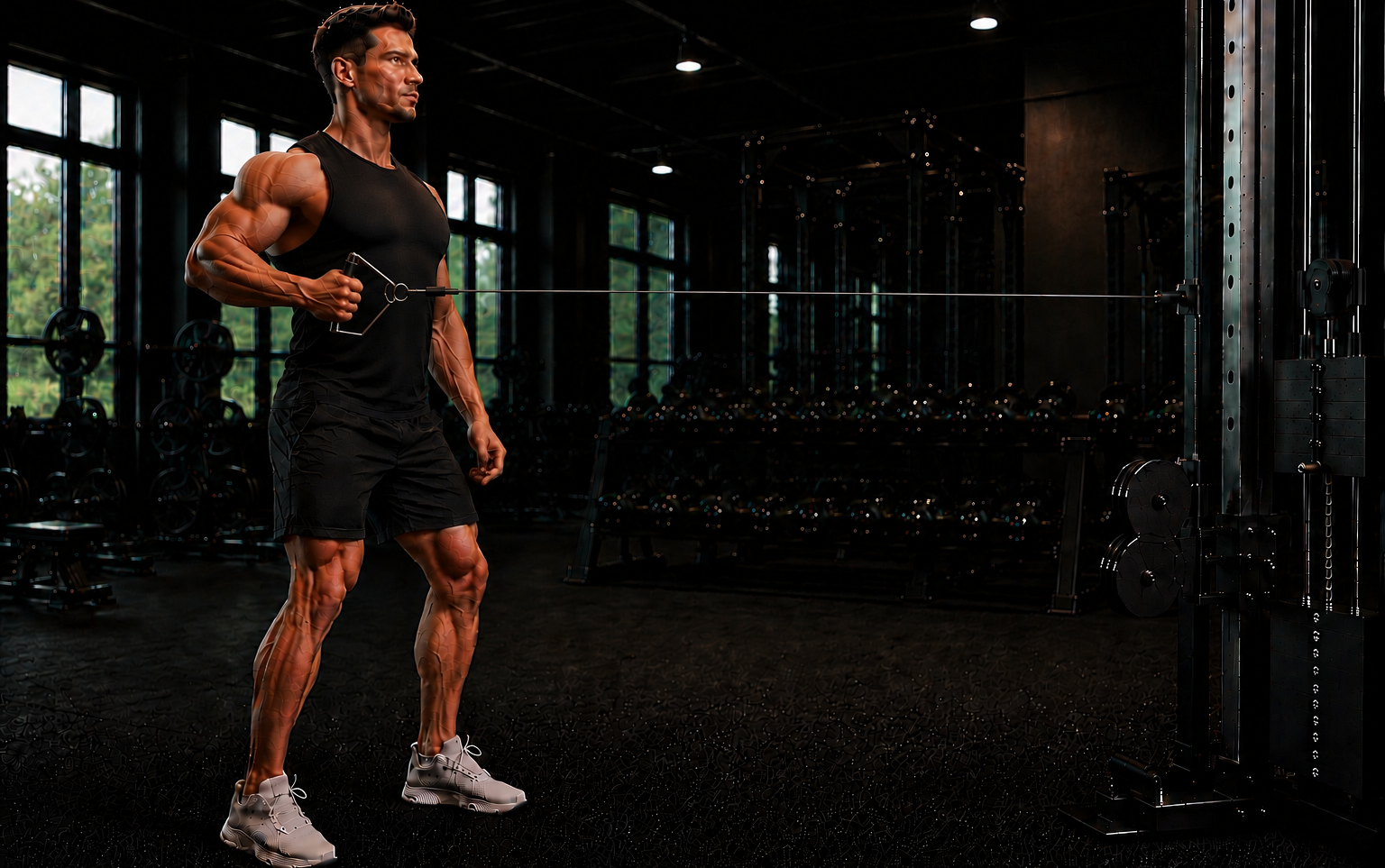
Meta Description: Learn how to perform the standing or kneeling one-arm cable row with proper form, including elbow path, torso rotation, benefits and common mistakes.
The one-arm cable row is an excellent variation of the traditional seated cable row. By training one side at a time, it allows you to use a more natural pulling path, move the elbow farther behind the body and create a strong contraction through the working side of the back.
Unlike a fixed two-arm row, the unilateral setup gives the shoulder blade more freedom to move. A small amount of controlled torso rotation can also increase the range of motion, helping you reach a deeper stretch at the start and a tighter peak contraction at the finish.
The key is control. The exercise should not become a twisting movement powered by momentum. The torso may rotate slightly, but the back muscles should still produce the pull.
What Is a One-Arm Cable Row?
The one-arm cable row is a horizontal pulling exercise performed using a single handle attached to a cable machine.
It can be performed:
- Standing
- Half-kneeling
- Tall-kneeling
- Seated
- In a split stance
The standing and kneeling versions are particularly useful because they allow greater freedom through the shoulder and torso than a conventional seated row.
The movement involves pulling the handle towards and slightly around the body while driving the elbow backwards.
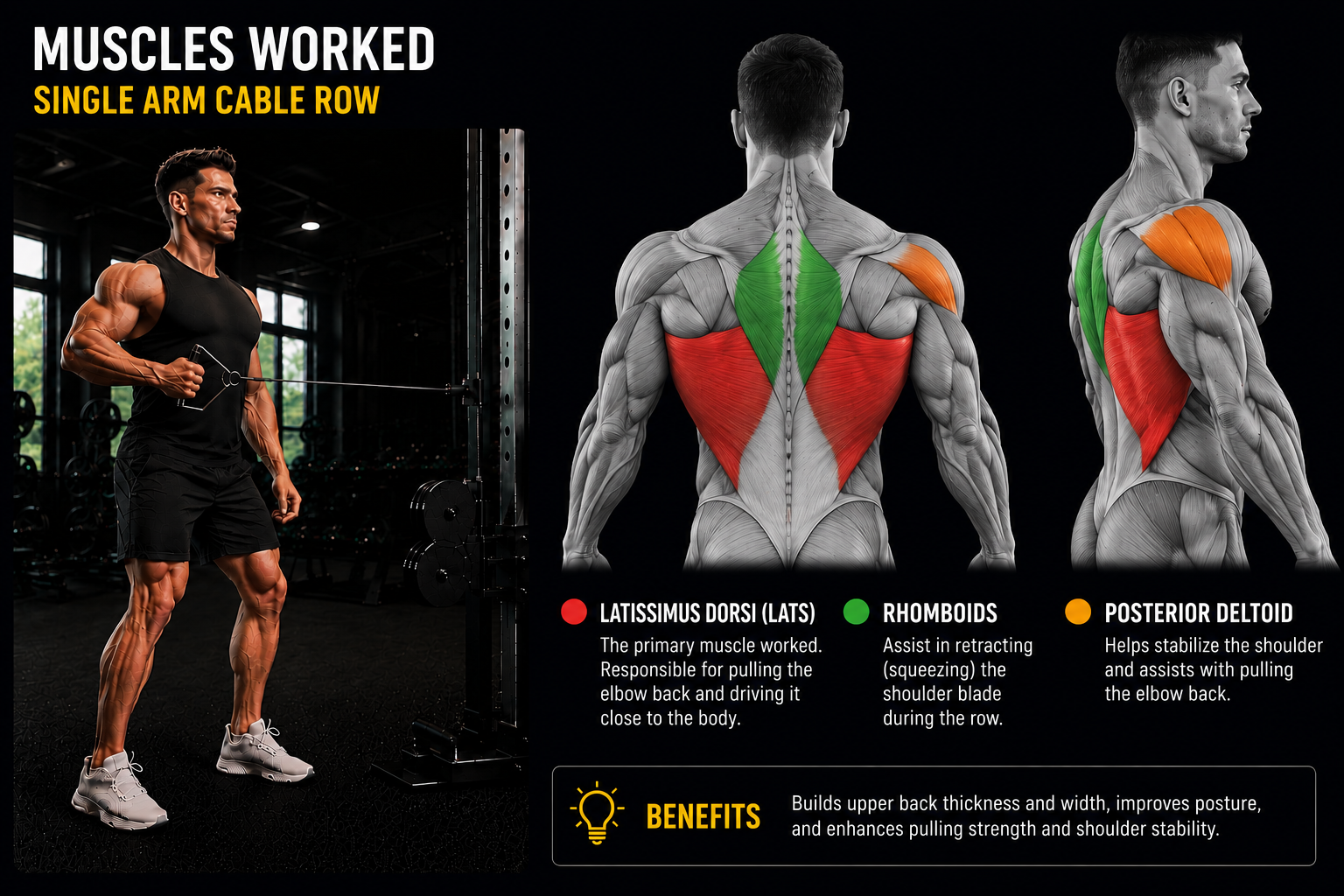
Which Muscles Does the One-Arm Cable Row Work?
Latissimus Dorsi
The lats are heavily involved as the upper arm moves backwards and towards the torso.
Keeping the elbow relatively close to the body generally increases lat contribution.
Rhomboids
The rhomboids help retract the shoulder blade at the end of the pull.
Middle and Lower Trapezius
These muscles help control the shoulder blade and stabilise the upper back.
Rear Deltoid
The rear shoulder assists as the upper arm travels behind the torso.
Biceps and Forearms
The biceps bend the elbow, while the forearms help control the handle.
Core and Obliques
Because the exercise is unilateral, your core must resist excessive rotation.
This is especially noticeable in standing and half-kneeling variations.

Why This Variation Can Create a Strong Peak Contraction
The one-arm setup allows the working shoulder to move more freely than it can during a two-arm row.
As you pull, the shoulder blade can retract naturally and the elbow can travel slightly around the side of the body.
A small amount of controlled torso rotation may also allow the working arm to move farther behind you.
This can help create:
- A stronger shortened-position contraction
- A greater feeling of the lat and middle back working
- A longer individual range of motion
- Better left-to-right muscle awareness
- Improved mind-muscle connection
It is important not to exaggerate the rotation. The benefit comes from allowing the shoulder and torso to move naturally, not from twisting your entire body to move more weight.
How to Perform the Standing One-Arm Cable Row
Setting Up
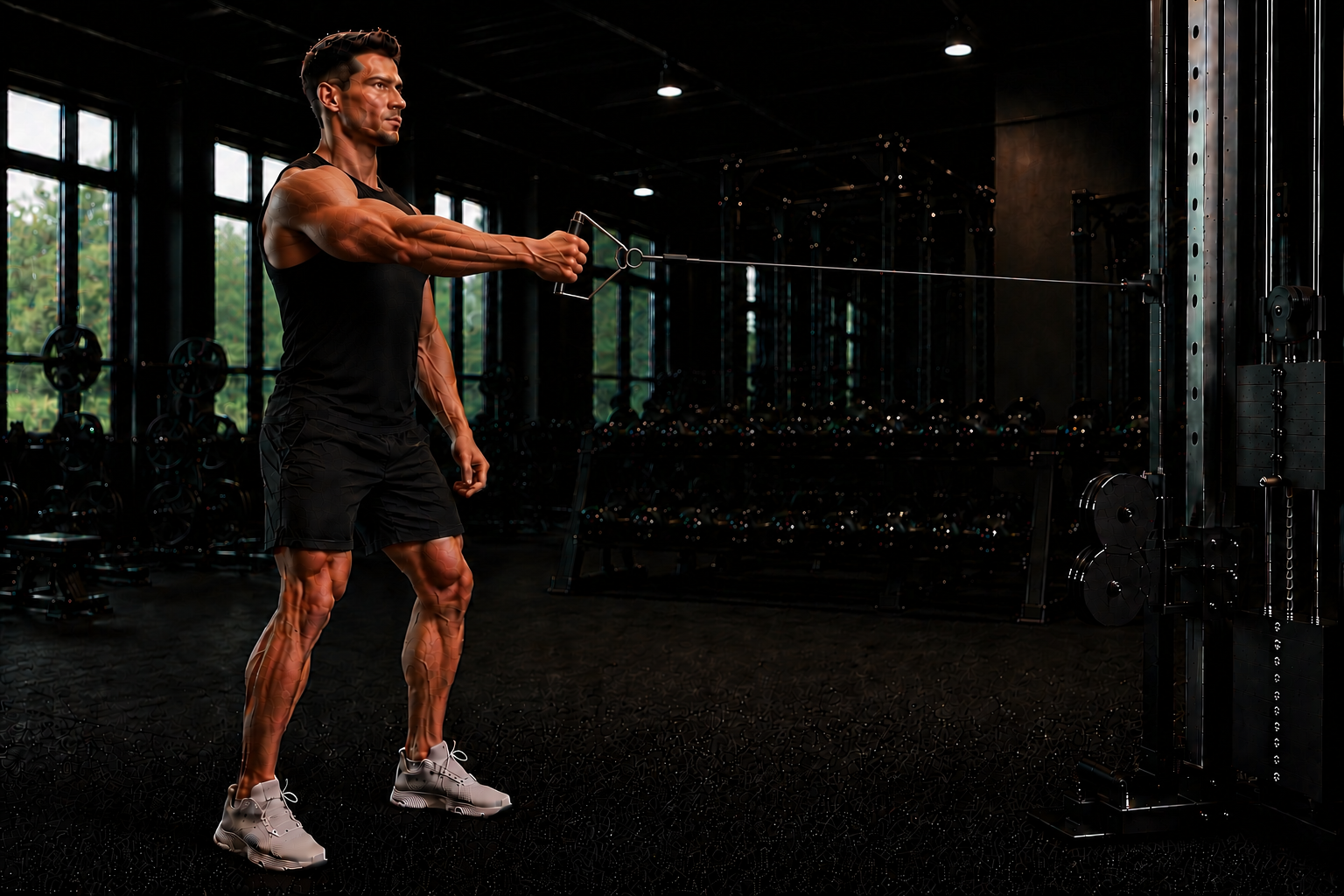
- Attach a single handle to a cable set around waist or lower-chest height.
- Stand facing the machine.
- Hold the handle with one hand.
- Use a staggered stance for stability.
- Keep a slight bend in your knees.
- Brace your core.
- Allow the working arm to extend forwards under control.
You may allow the working shoulder to reach slightly towards the cable to create a comfortable stretch.
Avoid rounding your entire back.
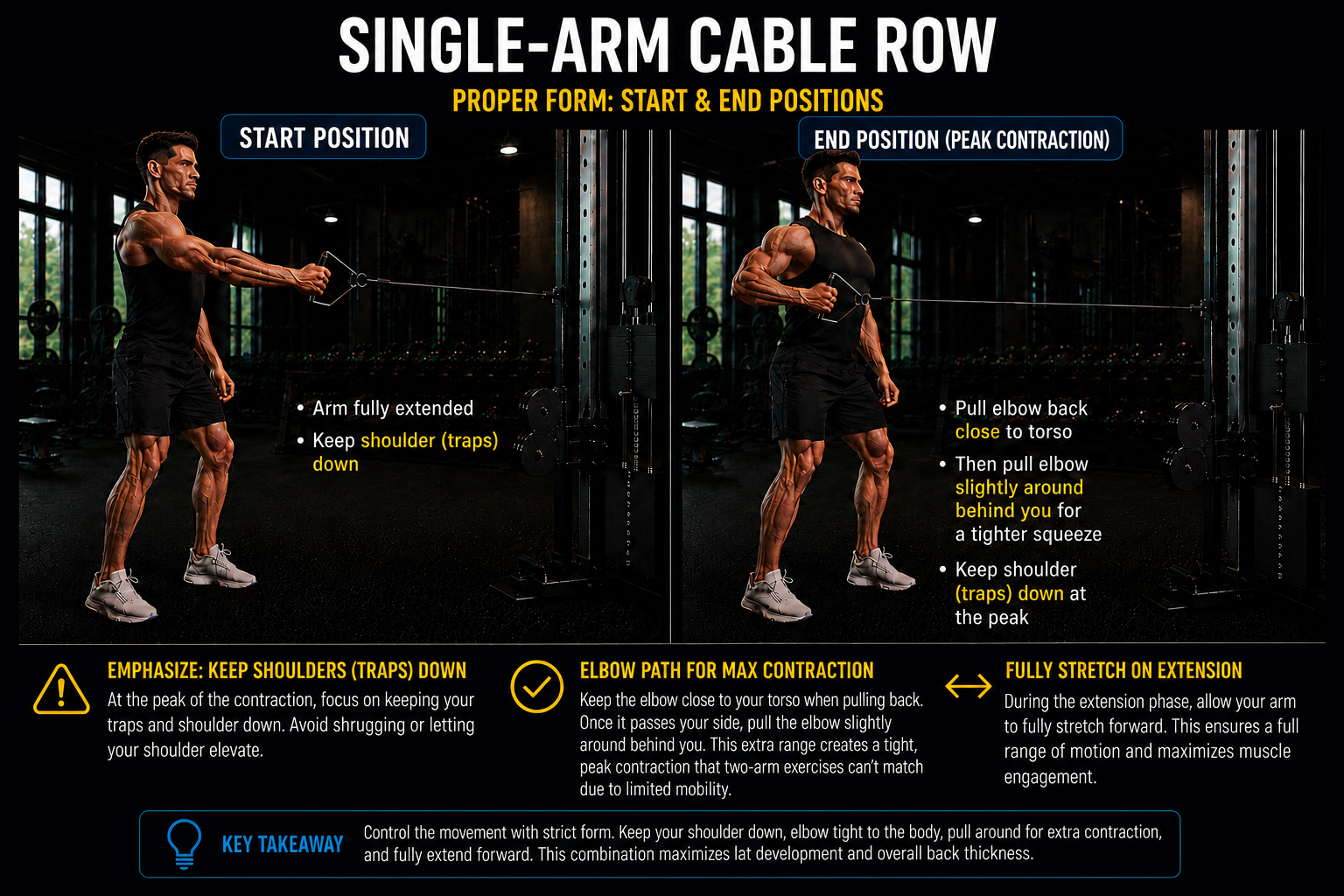
The Pulling Phase
- Begin by drawing the shoulder blade backwards.
- Drive your elbow behind you, keeping your traps pushed down..
- Continue pulling the elbow slightly around the side of your body.
- Allow a small amount of torso rotation towards the working side.
- Keep your chest lifted.
- Finish with a deliberate squeeze through the lat and middle back – drawing your elbow back and in towards your torso for maximal lower back (latissimus dorsi) contraction .
The handle will usually finish close to the lower ribs, waist or side of the abdomen.
Do not focus on pulling with your hand. Think about moving your elbow backwards and around your body.
The Return Phase
- Extend the arm slowly.
- Allow the shoulder blade to glide forwards.
- Rotate the torso back towards the cable in a controlled manner.
- Keep tension on the working side.
- Avoid letting the weight pull you forwards suddenly.
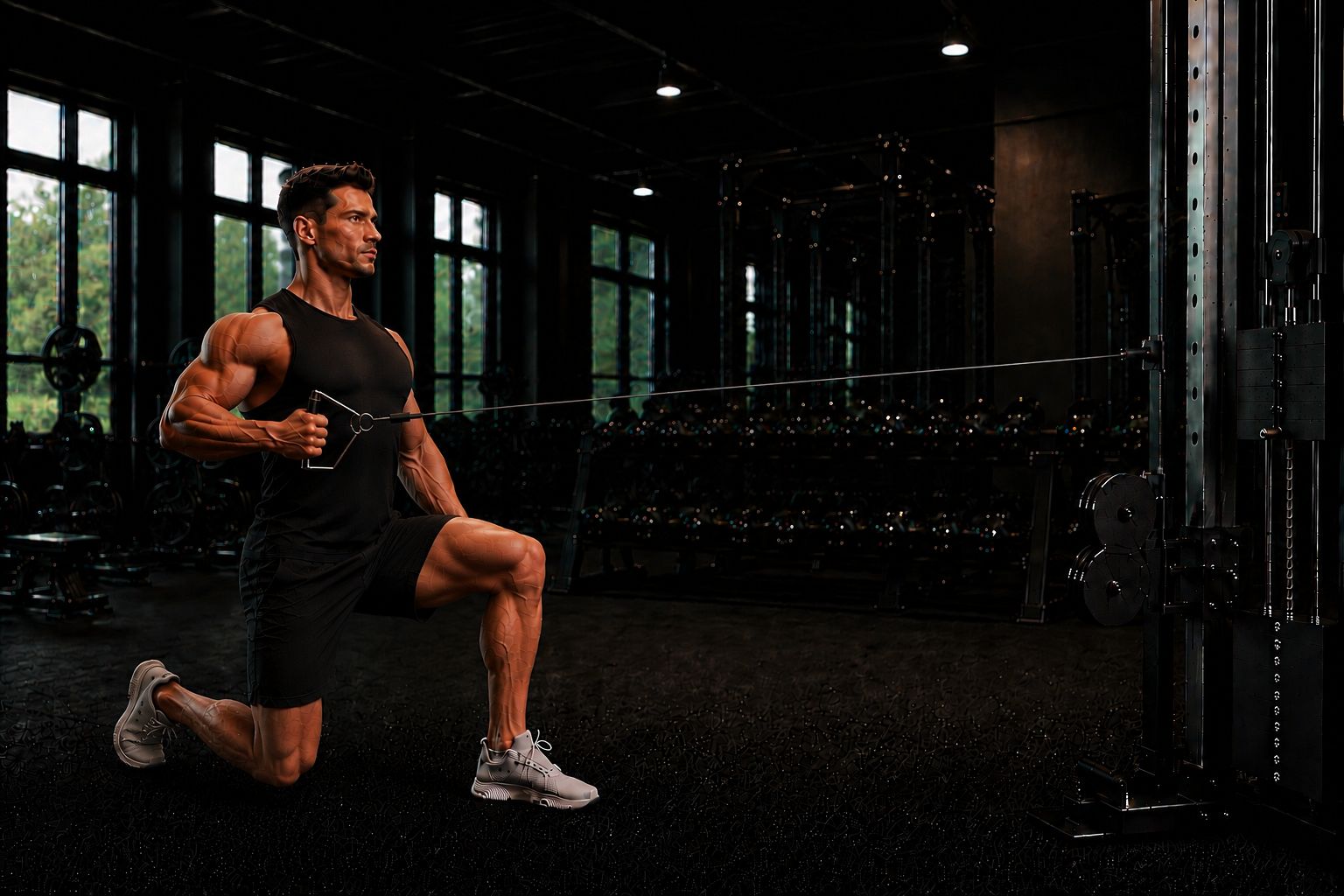
How to Perform the Half-Kneeling One-Arm Cable Row
The half-kneeling version increases stability while still allowing natural shoulder movement.
Setup
- Kneel with one knee on the floor.
- Place the opposite foot in front.
- Hold the handle with the arm opposite the front leg or whichever setup feels most stable.
- Keep your hips square.
- Brace your core.
- Maintain an upright torso.
Technique
Pull the elbow backwards and slightly around your body.
Allow a small amount of upper-torso rotation, but avoid twisting through the hips.
Pause briefly at the end of the movement before returning under control.
Benefits of the Half-Kneeling Version
- Reduces lower-body momentum
- Improves core control
- Makes excessive leaning more difficult
- Provides a stable base
- Helps isolate the working side more effectively
Standing vs Kneeling One-Arm Cable Row
Standing Version
Benefits:
- Allows a natural athletic stance
- Permits slightly more torso movement
- Can use more weight
- Greater whole-body involvement
Drawbacks:
- Easier to use momentum
- More balance required
- Torso rotation may become excessive
Kneeling Version
Benefits:
- Greater stability
- Less opportunity to swing
- Stronger core involvement
- Easier to control the shoulder blade
Drawbacks:
- Usually uses slightly less weight
- Kneeling may be uncomfortable
- Requires more setup space
Both versions are effective. Choose the one that allows the best combination of control, comfort and back engagement.
Where Should the Elbow Travel?
The elbow path changes the emphasis of the exercise.
Elbow Close to the Body
This tends to emphasise:
- Latissimus dorsi
- Teres major
- Lower portion of the back
Pull the handle towards the waist or lower ribs.
Elbow Slightly Out
This places more emphasis on:
- Rhomboids
- Middle trapezius
- Rear deltoids
Pull the handle towards the middle ribs.
For a lat-focused one-arm cable row, keep the elbow close and think about driving it towards your back pocket before allowing it to travel slightly around the torso.
How Much Torso Rotation Should You Use?
A small amount of rotation can improve the movement.
At the start, the working shoulder may rotate slightly towards the cable.
At the finish, the torso may rotate slightly away as the elbow travels behind the body.
This can create a longer, more natural range of motion.
However, excessive rotation can reduce the amount of work performed by the back.
Good rotation is:
- Smooth
- Controlled
- Relatively small
- Driven by the shoulder and upper torso
- Consistent from rep to rep
Poor rotation is:
- Fast
- Jerky
- Powered by the hips
- Used to throw the weight backwards
- Different on every repetition
Common One-Arm Cable Row Mistakes
Pulling With the Hand
This often causes the biceps to dominate.
Focus on driving the elbow backwards.
Twisting Too Far
Excessive rotation turns the exercise into a whole-body movement.
Use only enough rotation to support a natural shoulder path.
Shrugging the Shoulder
Keep the shoulder away from your ear – keep your traps pressed down when pulling.
A shrugged position often shifts work towards the upper trapezius.
Pulling the Elbow Too Far Back
More range is not always better.
Stop when the back is fully contracted and the shoulder remains comfortable.
Using Too Much Weight
Heavy loading can cause:
- Torso swinging
- Shortened range
- Poor shoulder control
- Grip fatigue
- Excessive rotation
Choose a weight that allows a smooth pull and controlled return.
Letting the Cable Pull You Forwards
Maintain tension during the return phase.
Do not allow the weight stack to drag your shoulder forwards suddenly.
How Many Sets and Repetitions Should You Perform?
For muscle growth:
- 3–4 sets
- 8–15 repetitions per side
- 60–90 seconds of rest
For beginners:
- 2–3 sets
- 10–15 repetitions per side
- Light-to-moderate resistance
Begin with the weaker side and match the same number of repetitions on the stronger side.
Most sets should finish with one to three clean repetitions left in reserve.
Where Should It Fit Into a Back Workout?
The one-arm cable row works well after heavier compound exercises.
Example Back Workout
- Lat Pulldown
- Barbell or Chest-Supported Row
- One-Arm Cable Row
- Face Pull
- Biceps Curl
It can also replace the seated cable row when you want:
- More unilateral work
- Greater shoulder-blade freedom
- A stronger peak contraction
- More core involvement
- A different pulling angle
One-Arm Cable Row vs Seated Cable Row
One-Arm Cable Row
- Greater unilateral control
- Allows slight torso rotation
- Provides a more individual arm path
- Strong peak contraction
- Greater core involvement
Seated Cable Row
- More stable
- Easier to load heavily
- More time-efficient
- Better for symmetrical two-arm pulling
- Easier to standardise
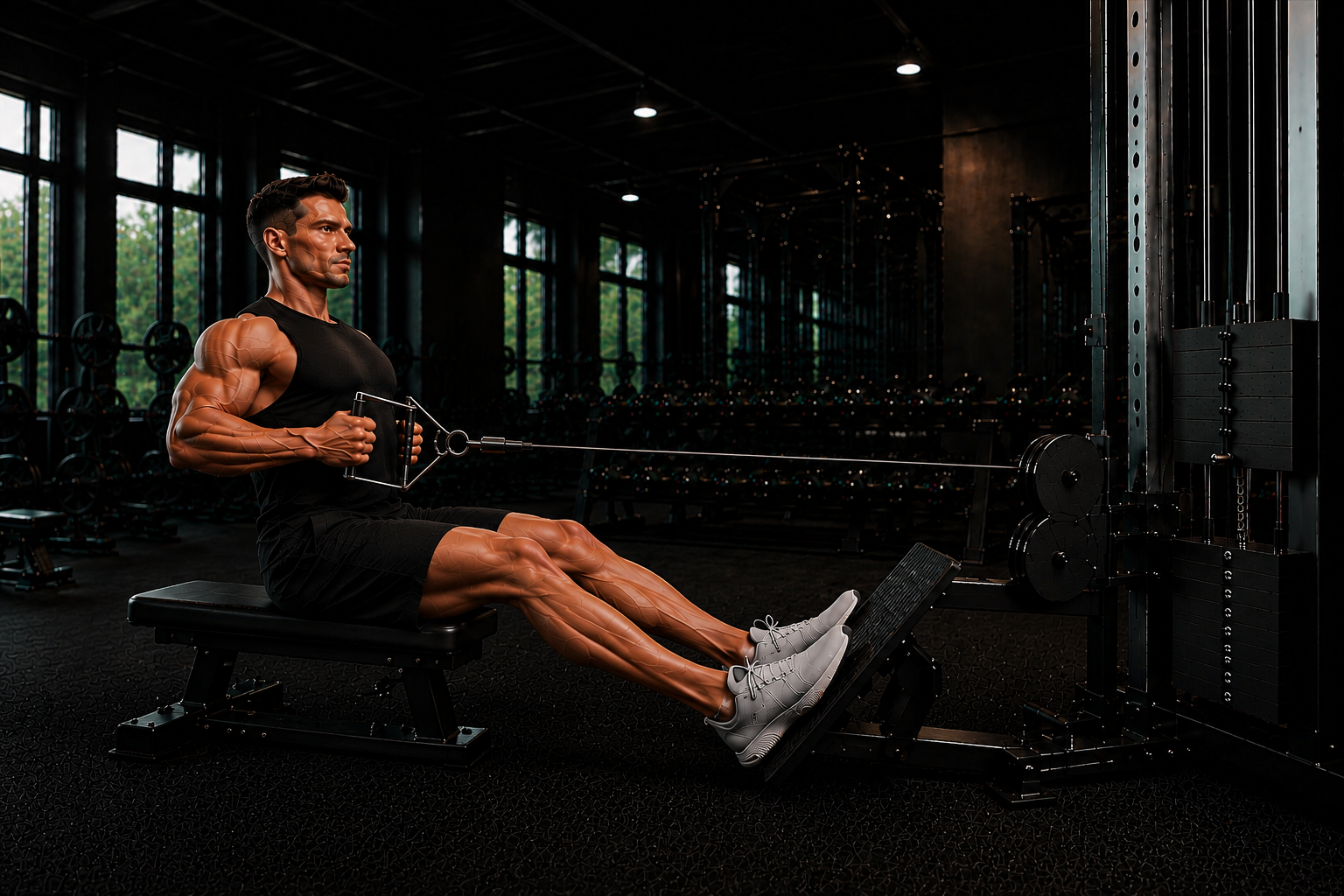
The seated row is generally better for stable, heavy volume. The one-arm version is excellent for focused contraction and correcting left-to-right differences.
Mastering the One-Arm Cable Row
The one-arm cable row is most effective when you allow the shoulder blade and upper torso to move naturally without relying on momentum.
Begin each repetition with a controlled reach. Then drive your elbow backwards and slightly around the body, allowing a small amount of torso rotation as you finish. Pause briefly and squeeze the working side of your back before returning slowly.
The standing version provides more freedom and loading potential, while the kneeling variation offers greater stability and makes it easier to control the movement.
Whichever version you choose, keep the emphasis on the elbow path rather than the hand. The goal is not simply to pull the handle towards you, but to shorten the back muscles as fully and deliberately as possible.
References
- Saeterbakken, A.H., Fimland, M.S., Navarsete, J. and Kroken, T. (2015). Muscle activity and core muscle activation in unilateral and bilateral row exercises. Journal of Strength and Conditioning Research, 29(9), 2469–2476.
- Lehman, G.J., Buchan, D.D., Lundy, A., Myers, N. and Nalborczyk, A. (2004). Variations in muscle activation during latissimus dorsi resistance-training exercises. Dynamic Medicine, 3, 4.
- Schoenfeld, B.J. (2010). The mechanisms of muscle hypertrophy and their application to resistance training. Journal of Strength and Conditioning Research, 24(10), 2857–2872.
- Fenwick, C.M.J., Brown, S.H.M. and McGill, S.M. (2009). Comparison of rowing exercises: Trunk muscle activation and lumbar spine motion. Journal of Strength and Conditioning Research, 23(2), 350–358.