

Hydration is rarely the headline topic in fitness.
It sits quietly in the background, often reduced to a passing comment — “drink more water” — before attention shifts back to training programmes and protein intake. Yet when progress stalls, energy dips, or performance feels inconsistent, hydration is often the missing piece.
Because muscle growth and development are not just driven by training and nutrition. They are supported — at a fundamental level — by water.
Ignore it, and performance suffers. Get it right, and everything else works more effectively.
Why Hydration Matters for Muscle Growth
The human body is made up of roughly 60% water, and muscle tissue itself is composed of approximately 75% water (Jéquier & Constant, 2010).
This alone should make its importance clear.
Water is involved in almost every physiological process that contributes to muscle growth:
- Nutrient transport (including amino acids and glucose)
- Removal of metabolic waste
- Regulation of body temperature
- Cellular function and structure
- Muscle contraction and nerve signalling
Without adequate hydration, these processes become less efficient. Over time, that inefficiency translates into reduced performance and slower recovery.
Hydration and Muscle Performance
Before muscle growth can occur, you need to perform well in training.
Even mild dehydration — as little as 2% of bodyweight loss through fluid — has been shown to impair physical performance (Sawka et al., 2007).
This can present as:
- Reduced strength output
- Decreased endurance
- Faster onset of fatigue
- Poorer concentration and coordination
In practical terms, this means:
- Fewer quality reps
- Lower training intensity
- Reduced total workload
And if the quality of your training drops, so too does the stimulus for muscle growth.

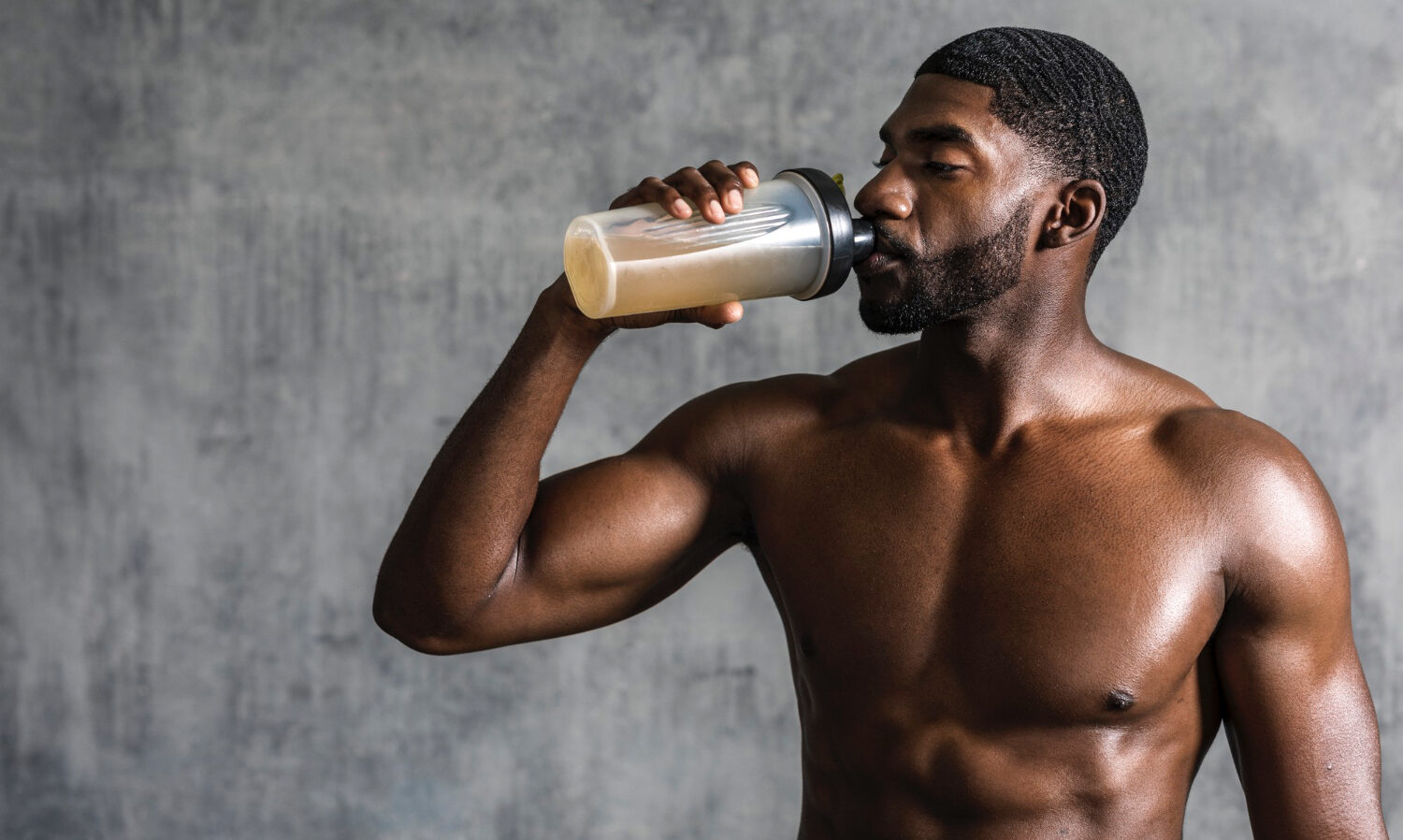
The Role of Water in Muscle Contraction
Muscle contraction relies on a series of electrical and chemical signals — processes that are heavily dependent on fluid balance.
Electrolytes such as:
- Sodium
- Potassium
- Calcium
…are dissolved in body fluids and are essential for nerve transmission and muscle contraction (Shirreffs & Sawka, 2011).
When hydration levels drop:
- Electrolyte balance is disrupted
- Muscle contractions become less efficient
- Cramping risk may increase
This is not just about comfort — it directly affects how effectively your muscles can perform under load.
Cell Hydration and Muscle Growth
One of the more interesting aspects of hydration is its relationship with cellular swelling, often referred to as “cell volumisation.”
When muscle cells are well hydrated, they appear fuller. But this is not just cosmetic.
Research suggests that increased cell hydration may act as an anabolic signal, promoting muscle protein synthesis and reducing protein breakdown (Haussinger, 1996).
In simple terms:
- Well-hydrated muscle cells create a more favourable environment for growth
- Dehydrated cells do the opposite
While hydration alone will not build muscle, it supports the processes that make growth possible.

Hydration and Recovery
Recovery is where muscle growth actually occurs — and hydration plays a key role here as well.
After training, your body needs to:
- Replenish glycogen stores
- Repair damaged muscle fibres
- Remove metabolic waste
Water is involved in all of these processes.
Dehydration can slow:
- Nutrient delivery to muscle tissue
- Waste removal
- Overall recovery time
This can leave you feeling fatigued for longer, reducing your ability to train effectively in subsequent sessions.
How Much Water Do You Actually Need?
There is no single number that applies to everyone, but general guidelines provide a useful starting point.
A commonly cited recommendation is:
- Around 2.5–3.5 litres per day for active individuals
However, your actual needs depend on:
- Body size
- Activity level
- Climate and temperature
- Sweat rate
A more practical approach is to monitor hydration through simple indicators.
Signs You Are Properly Hydrated
Rather than relying purely on numbers, look for:
- Pale yellow urine
- Consistent energy levels
- Minimal thirst throughout the day
- Stable performance in training
Signs of Dehydration
On the other hand:
- Dark urine
- Fatigue or sluggishness
- Headaches
- Reduced strength or endurance
- Dizziness
If these appear regularly, hydration is likely insufficient.
Hydration Around Your Workouts
Timing your fluid intake can improve both performance and recovery.
Before Training
- Aim to be well hydrated throughout the day
- Drink water 1–2 hours before training
During Training
- Sip water regularly, particularly during longer or intense sessions
After Training
- Replace fluids lost through sweat
- Include electrolytes if training was particularly intense or prolonged
This does not need to be complicated — consistency is far more important than precision.
Do You Need Electrolytes?
For most standard gym sessions, water is sufficient.
However, electrolytes become more relevant when:
- Training sessions exceed 60–90 minutes
- You sweat heavily
- You train in hot environments
In these cases, adding electrolytes can help maintain fluid balance and performance.
Common Hydration Mistakes
1. Only Drinking When Thirsty
Thirst is a delayed signal. By the time you feel thirsty, you may already be mildly dehydrated.
2. Overcomplicating Hydration
You do not need expensive supplements for most situations. Water does the job.
3. Ignoring Daily Intake
Hydration is not just about the workout — it is about consistency throughout the day.
4. Replacing Water with Caffeinated Drinks
Excessive caffeine can contribute to fluid loss and does not replace proper hydration.
Hydration, Strength, and Appearance
There is also a practical, visible aspect to hydration.
Well-hydrated muscles:
- Appear fuller
- Perform better
- Recover more efficiently
Dehydration, on the other hand, can lead to:
- Flat-looking muscles
- Reduced “pump” during training
- Lower performance output
While aesthetics should not drive behaviour entirely, they are often a useful indicator of internal function.

Bringing It All Together
Hydration is not a shortcut. It will not replace proper training or nutrition.
But it is a force multiplier.
When hydration is adequate:
- Training quality improves
- Recovery becomes more efficient
- Muscle growth processes are supported
When it is neglected:
- Performance drops
- Fatigue increases
- Progress slows
It is one of the simplest variables to control — and one of the easiest to overlook.
In fitness, there is a tendency to search for complex solutions.
New programmes, new supplements, new strategies.
Yet often, progress comes from refining the basics.
Hydration is one of those basics.
It underpins everything — from muscle contraction to recovery to performance. It is not glamorous, but it is essential.
Drink enough water. Do it consistently.
And allow the rest of your training to work as it should.
References
- Jéquier, E., & Constant, F. (2010). Water as an essential nutrient. European Journal of Clinical Nutrition.
- Sawka, M.N. et al. (2007). Exercise and fluid replacement. American College of Sports Medicine.
- Shirreffs, S.M., & Sawka, M.N. (2011). Fluid and electrolyte needs for training. Journal of Sports Sciences.
- Haussinger, D. (1996). The role of cellular hydration in the regulation of cell function. Biochemical Journal.