

Watch a group of experienced lifters set up for a heavy bench press and you’ll notice something almost all of them do before the bar leaves the rack. They pull their shoulders back, squeeze their shoulder blades together, lift their chest, and create a solid upper-body position before performing a single repetition.
To many beginners, this can seem unnecessary. After all, if the goal is to push a weight away from your body, why spend so much time thinking about your shoulder blades? Yet ask any good strength coach, powerlifter, or experienced personal trainer and they’ll tell you that shoulder blade positioning can make a huge difference to both performance and injury prevention.
One of the most common coaching cues you’ll hear during pressing exercises is “retract your shoulder blades”. While it sounds simple, this small adjustment can significantly improve pressing mechanics, increase stability, help generate more force, and reduce stress on the shoulder joint.
Whether you’re performing a bench press, dumbbell press, chest press machine, or even push-ups, understanding how to properly position your shoulder blades can help you get more from your training while lowering your risk of common shoulder issues.
In this guide, we’ll explain exactly what shoulder blade retraction is, why it matters during pressing exercises, the benefits it provides, common mistakes to avoid, and how to apply it correctly in your own workouts.
What Does Shoulder Blade Retraction Mean?
Shoulder blade retraction refers to pulling your shoulder blades (scapulae) backwards towards your spine.
Imagine trying to gently squeeze a pencil between your shoulder blades.
That’s essentially the movement involved.
When properly retracted:
- The shoulders move backwards
- The chest lifts slightly
- The upper back becomes tighter
- The shoulder joints become more stable
Retraction is often paired with slight depression, meaning the shoulders are also pulled down away from the ears.
Together, these movements create a stronger and more secure pressing position.


Why Shoulder Blade Position Matters During Pressing Exercises
The shoulder is one of the most mobile joints in the body.
While this mobility allows a wide range of movement, it also makes the joint inherently less stable than other joints such as the hip.
Pressing exercises place significant forces through the shoulder complex.
Without adequate stability, the shoulder joint may experience unnecessary stress, potentially increasing the risk of discomfort or injury over time.
Retracting the shoulder blades helps create a stable base from which the arms can generate force.
Think of it like firing a cannon from solid ground rather than from a moving platform.
The stronger the foundation, the more effectively force can be produced.
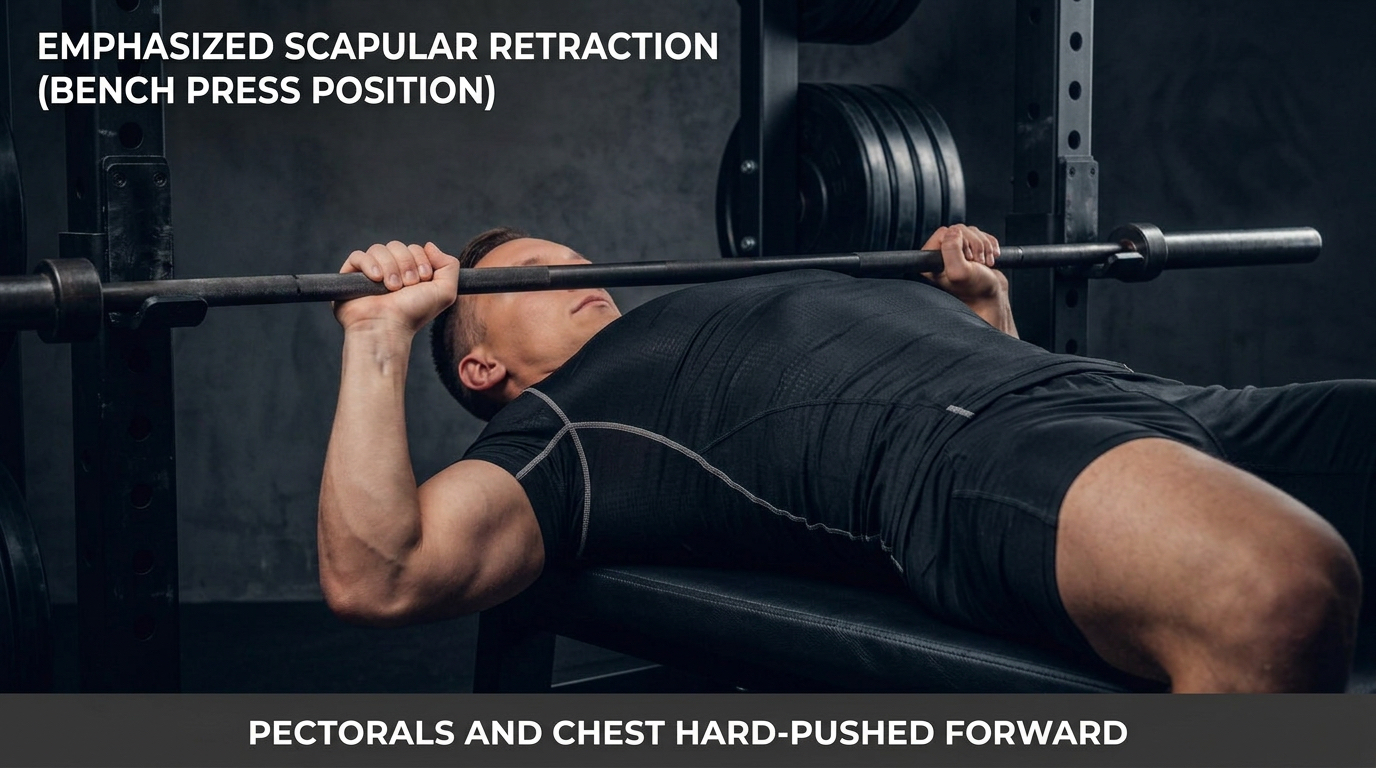
Benefits of Retracting Your Shoulder Blades During Pressing Exercises
Increased Upper Body Stability
One of the primary reasons lifters retract their shoulder blades is to improve stability.
During exercises such as:
- Barbell bench press
- Dumbbell bench press
- Incline press
- Chest press machine
The shoulder blades act as a platform supporting the upper body.
By pulling them together and maintaining tension, you create a more secure position throughout the lift.
This stability can help improve control and consistency during each repetition.
Improved Force Production
A stable base allows muscles to generate force more efficiently.
When the shoulder blades are loose and moving excessively, some of the force produced by the chest, shoulders, and triceps may be lost through instability.
Research on resistance training mechanics consistently shows that stable joint positioning can improve force transfer throughout a movement.
This is one reason why many powerlifters prioritise upper-back tightness before heavy pressing attempts.
Better Bench Press Performance
If your goal is increasing your bench press, shoulder blade retraction should be a priority.
Retracting the shoulder blades helps:
- Create a stronger pressing platform
- Improve bar path consistency
- Enhance upper-back tightness
- Improve overall body positioning
Many lifters find that improving their setup alone can immediately increase pressing confidence and performance.
Reduced Shoulder Joint Stress
One of the biggest advantages of proper shoulder blade positioning is reduced stress on vulnerable shoulder structures.
When the shoulders roll forwards during pressing exercises, the position can place additional strain on:
- Rotator cuff muscles
- Tendons
- Ligaments
- The front of the shoulder joint
Retraction helps position the shoulder more favourably during loaded pressing movements.
This may help reduce unnecessary irritation over time.
Improved Postural Awareness
Many people spend hours each day sitting at desks, using laptops, or looking down at phones.
These habits often contribute to rounded shoulders and poor upper-body posture.
Practising proper shoulder blade positioning during training can help improve awareness of upper-body alignment and movement quality.
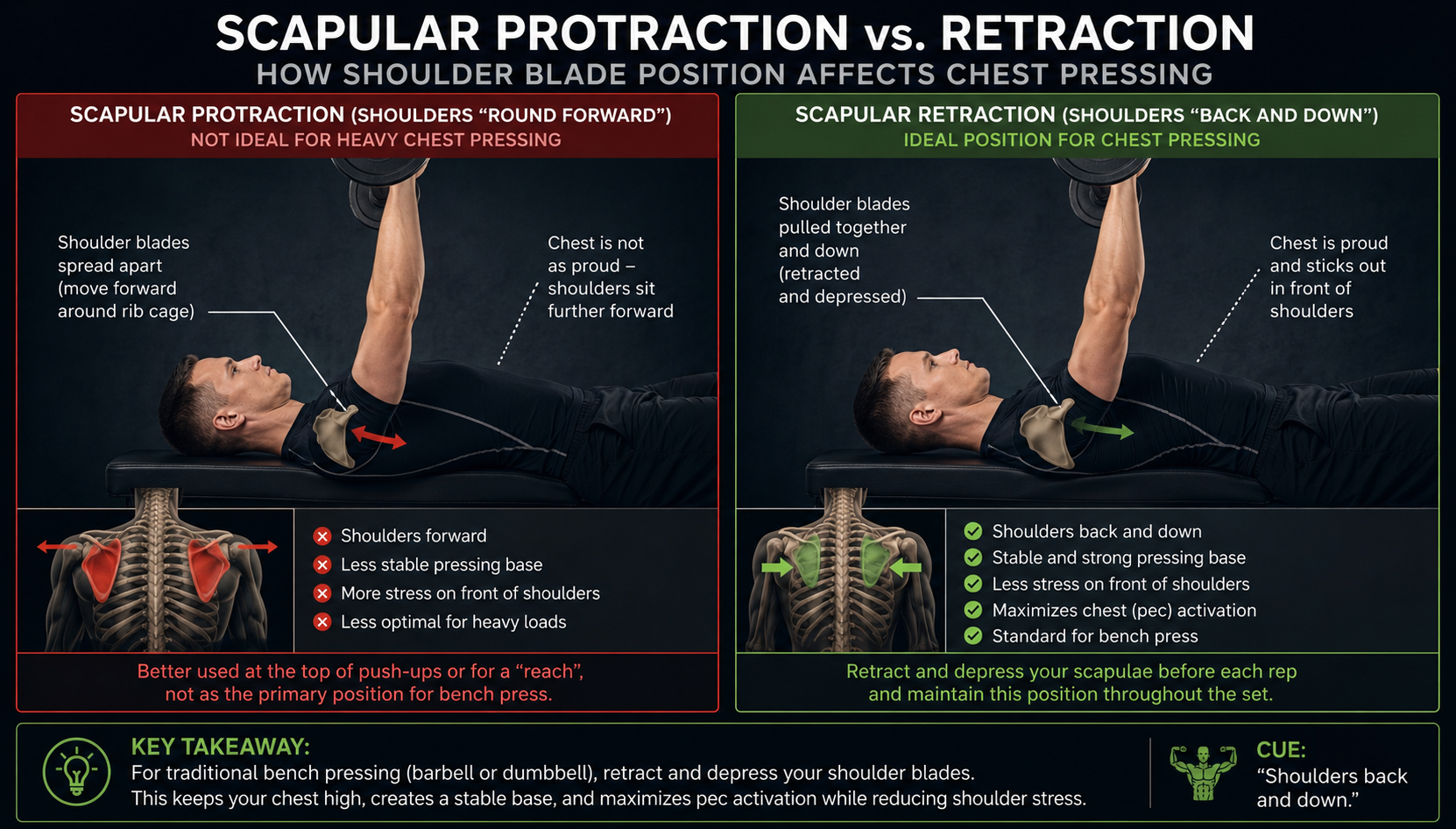
What Happens If You Don’t Retract Your Shoulder Blades?
Many beginners perform pressing exercises with their shoulders rolled forwards.
This often occurs because they focus solely on moving the weight rather than establishing a stable position beforehand.
Potential consequences include:
- Reduced stability
- Less efficient force production
- Poor bar path control
- Increased shoulder discomfort
- Greater reliance on smaller stabilising muscles
While not every poorly performed repetition leads to injury, consistently pressing from unstable positions can contribute to problems over time.
The Science Behind Shoulder Blade Retraction
The shoulder joint relies heavily on muscular support for stability.
Unlike the hip joint, which sits deeply within the pelvis, the shoulder sacrifices stability for mobility.
Research examining shoulder biomechanics highlights the importance of scapular positioning during upper-body movements.
The scapula provides an attachment point for numerous muscles, including:
- Trapezius
- Rhomboids
- Serratus anterior
- Rotator cuff muscles
Proper scapular positioning helps optimise muscle function and joint mechanics during resistance training.
Studies have shown that altered scapular movement patterns are often associated with shoulder pain and dysfunction.
While shoulder blade retraction isn’t a cure-all, it forms an important part of safe and efficient pressing mechanics.
Which Pressing Exercises Require Shoulder Blade Retraction?
Barbell Bench Press
The bench press is arguably the exercise where shoulder blade retraction is most important.
Before unracking the bar:
- Pull the shoulder blades together
- Pull them slightly downwards
- Lift the chest
- Maintain tension throughout the set
Many strength coaches consider this fundamental bench press technique.
Dumbbell Bench Press
The same principles generally apply.
Although dumbbells allow greater freedom of movement, maintaining upper-back tension and scapular retraction can still improve stability and control.
Incline Bench Press
The incline press places slightly more emphasis on the upper chest and shoulders.
Retraction remains important for maintaining shoulder stability throughout the movement.
Machine Chest Press
Even though the machine provides external stability, good shoulder positioning remains beneficial.
Avoid allowing the shoulders to roll forwards excessively at the bottom of the movement.
Push-Ups
Push-ups are slightly different.
The shoulder blades naturally move throughout the exercise.
However, maintaining good upper-back control and avoiding collapsed shoulder positions remains important.
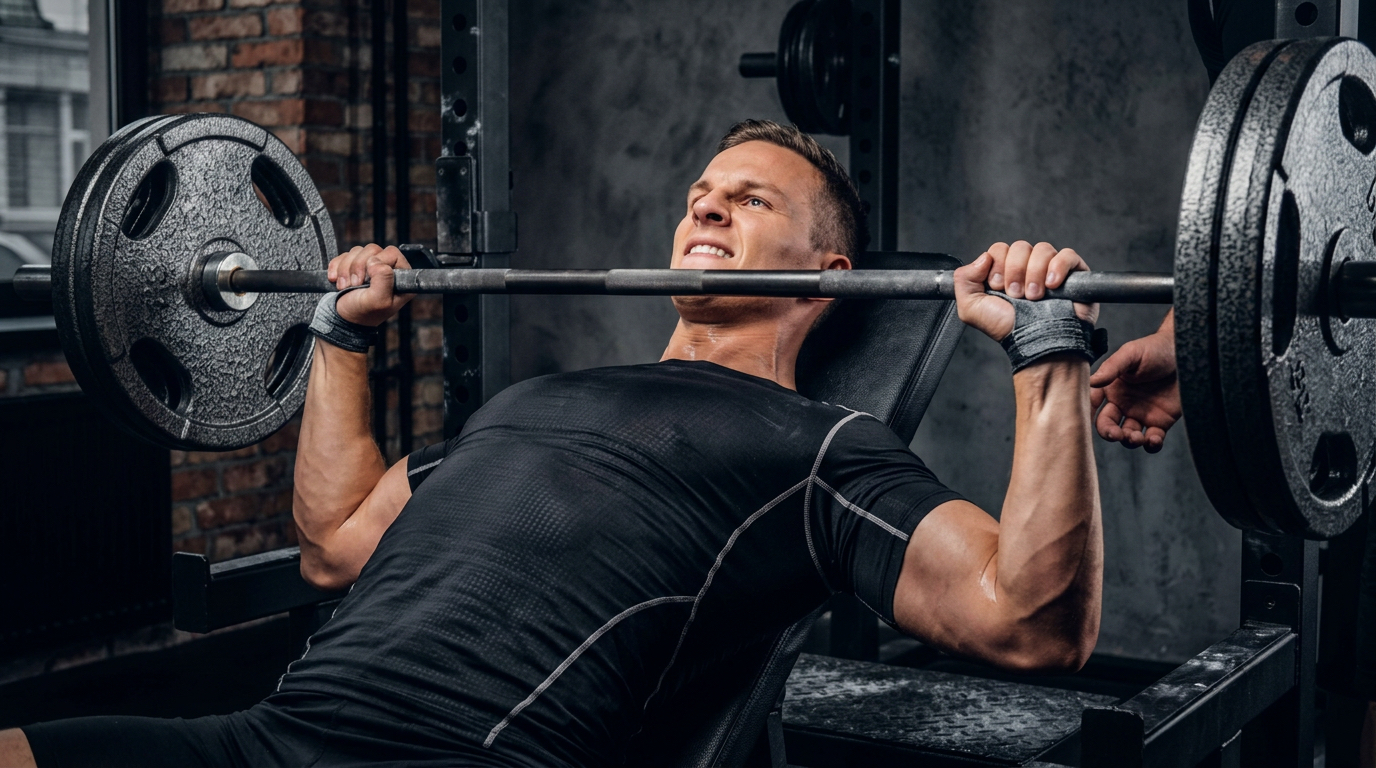
Common Mistakes When Retracting the Shoulder Blades
Over-Squeezing Excessively
A common mistake is trying to squeeze the shoulder blades together as hard as possible.
Retraction should create stability, not tension so extreme that normal movement becomes restricted.
Think “tight and controlled” rather than “maximal squeeze”.
Shrugging the Shoulders
Many people retract their shoulders but simultaneously elevate them towards their ears.
This can reduce stability and create unnecessary neck tension.
Remember:
- Back and down
- Not back and up
Losing Position During the Set
Establishing good shoulder position before a lift is only half the battle.
Many lifters start in a strong position but lose scapular tension halfway through the set.
Focus on maintaining upper-back tightness from the first repetition to the last.
Prioritising Weight Over Technique
As loads increase, technique often deteriorates.
Never sacrifice shoulder positioning simply to move more weight.
Long-term progress always benefits from sound movement mechanics.
How to Retract Your Shoulder Blades Properly
A simple process can help.
Step 1: Stand Tall
Start with good posture.
Keep your chest up and spine neutral.
Step 2: Pull Your Shoulders Back
Imagine gently bringing your shoulder blades towards one another.
Avoid excessive force.
Step 3: Pull Your Shoulders Down
Imagine placing your shoulder blades into your back pockets.
This helps prevent shrugging.
Step 4: Maintain Tension
Keep the upper back engaged throughout the exercise.
Don’t allow the shoulders to roll forwards under load.
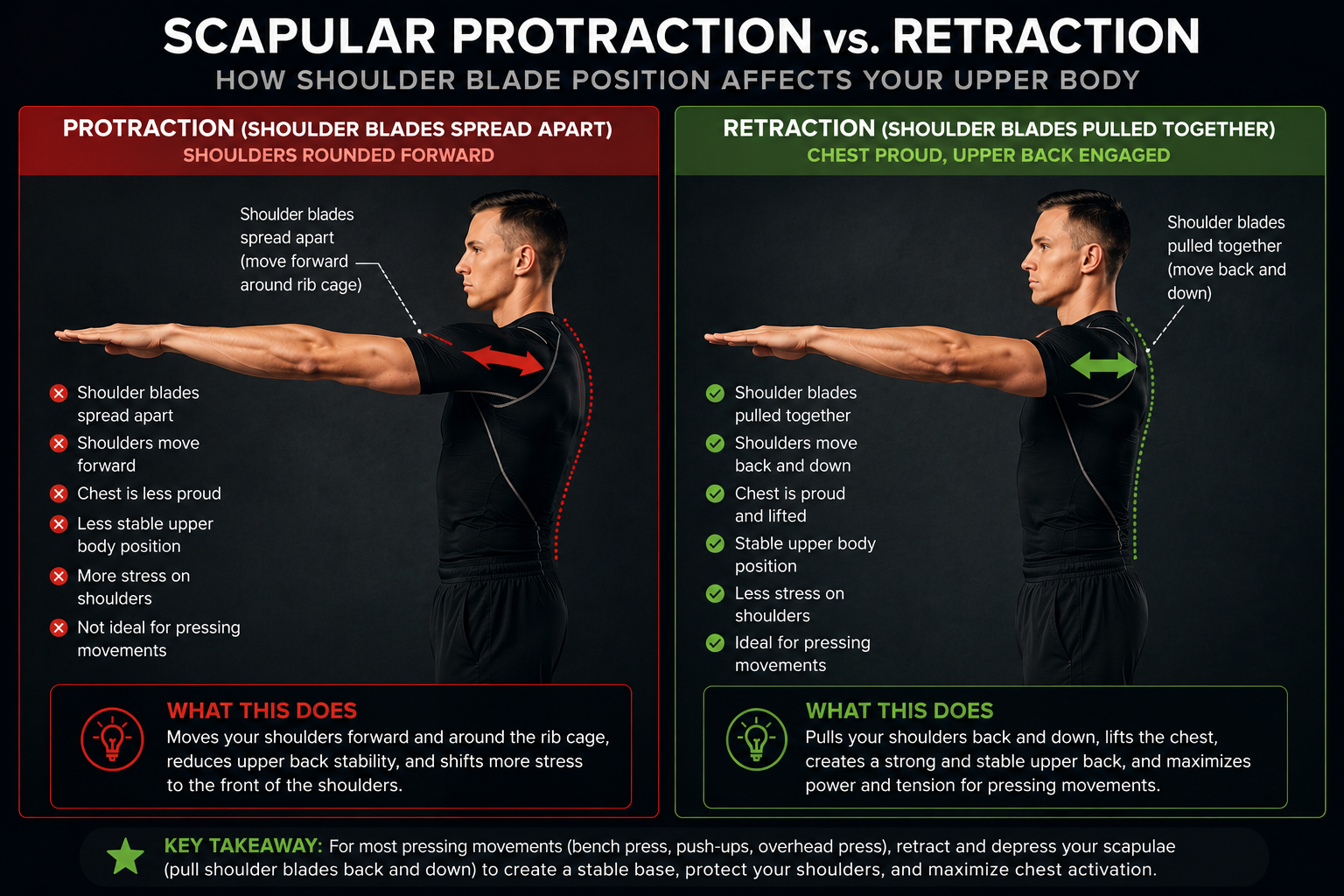
Exercises That Help Improve Scapular Control
If you struggle to maintain shoulder blade positioning, strengthening the upper back can help.
Useful exercises include:
Face Pulls
Face pulls strengthen the rear deltoids and upper-back muscles responsible for scapular control.
Seated Cable Rows
Rows teach proper retraction and help improve upper-back strength.
Chest-Supported Rows
These minimise lower-back involvement while targeting the muscles that stabilise the shoulder blades.
Band Pull-Aparts
A simple but effective exercise for improving postural strength and scapular awareness.
Rear Delt Flyes
Strengthening the rear shoulder muscles often improves shoulder stability during pressing exercises.
Should You Retract Your Shoulder Blades During Overhead Pressing?
This is where some confusion arises.
For horizontal pressing exercises such as the bench press, shoulder blade retraction is generally encouraged.
For overhead pressing movements, the situation is slightly different.
During exercises such as:
- Standing overhead press
- Seated shoulder press
- Push press
The shoulder blades naturally need to rotate upwards as the arms move overhead.
Forcing excessive retraction throughout the entire movement may actually interfere with normal shoulder mechanics.
Instead, focus on:
- Maintaining a strong upper back
- Keeping the ribcage controlled
- Allowing natural scapular movement
The coaching cue of aggressive retraction is most relevant to horizontal pressing movements.
Retracting Your Shoulder Blades for Strength vs Hypertrophy
The benefits apply regardless of your goal.
For Strength Training
Retracted shoulder blades improve:
- Stability
- Force production
- Pressing efficiency
This is particularly important for powerlifters and strength athletes.
For Muscle Growth
Better positioning allows muscles to work more effectively while reducing compensatory movement patterns.
This can improve exercise quality and muscle recruitment.
In both cases, good technique creates a stronger foundation for long-term progress.

Try Retracting your Scapular on Your Next Chest Workout
Retracting your shoulder blades might seem like a minor technical detail, but it’s one of the most important foundations of effective pressing technique. Whether you’re bench pressing 40kg or 140kg, creating a stable upper-body position allows you to press more efficiently, maintain better control, and reduce unnecessary stress on the shoulder joint.
Many lifters spend years focusing on adding weight to the bar while overlooking the quality of their setup. Yet improving shoulder blade positioning is often one of the quickest ways to enhance both performance and comfort during pressing exercises. It doesn’t require special equipment, advanced training methods, or complicated programming—just attention to proper technique.
As with most aspects of resistance training, consistency matters. The more often you practise setting your shoulders correctly before pressing movements, the more natural the habit becomes. Over time, that stronger foundation can contribute to better lifting mechanics, healthier shoulders, and improved results in the gym.
References
- Schoenfeld, B.J. (2010). The mechanisms of muscle hypertrophy and their application to resistance training. Journal of Strength and Conditioning Research, 24(10), 2857-2872.
- Kibler, W.B., Sciascia, A., & Wilkes, T. (2012). Scapular dyskinesis and its relation to shoulder injury. Journal of the American Academy of Orthopaedic Surgeons, 20(6), 364-372.
- Cools, A.M., Struyf, F., De Mey, K., et al. (2014). Rehabilitation of scapular dyskinesis. British Journal of Sports Medicine, 48(8), 692-697.
- Lehman, G.J. (2005). The influence of grip width and forearm pronation/supination on upper-body muscle activity during the flat bench press. Journal of Strength and Conditioning Research, 19(3), 587-591.
- American College of Sports Medicine. (2021). Resistance Training for Health and Fitness: Position Stand and Evidence-Based Recommendations.